
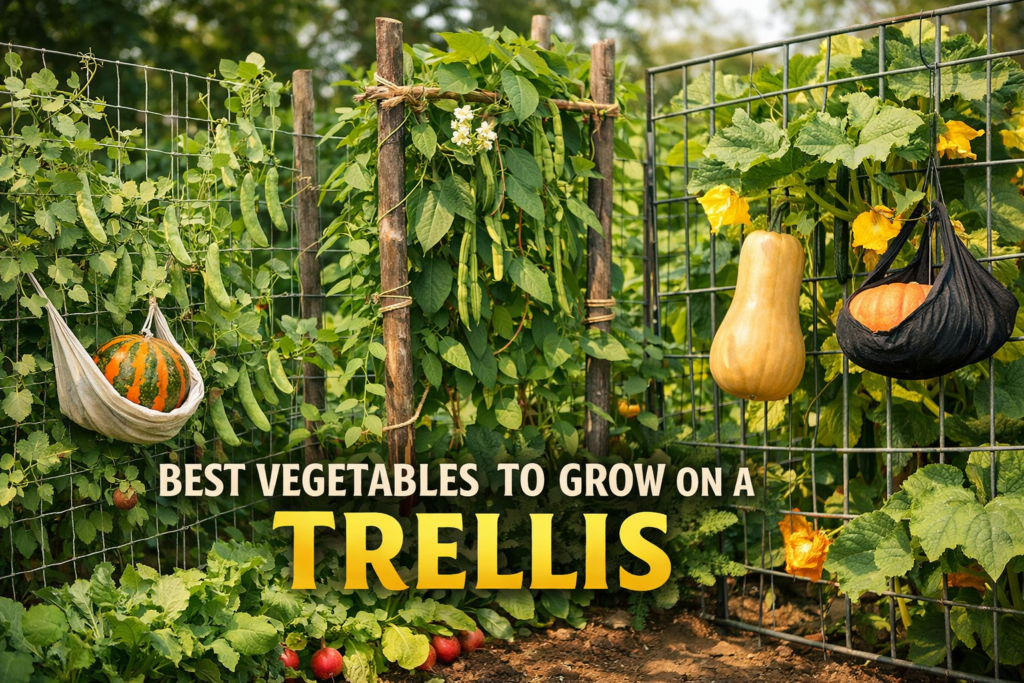
If you’re looking at a small backyard—or perhaps just a tiny balcony—and wondering how on earth you’re going to fit a vegetable garden in there, I have one word for you: Up.
When I first started gardening, I thought everything had to crawl along the ground. I quickly learned that letting plants sprawl is a recipe for stepped-on stems, hidden pests, and “mystery rot.” Switching to a vertical garden was a total game-changer. It’s not just about saving space; it’s about giving your plants better airflow and more sunlight.
If you’re building your first vertical garden, you don’t need a degree in engineering, but you do need to understand how your “climbers” actually climb. Let’s dive into the best veggies for your trellis and how to keep happy.
1. The “Graspers”: Peas and Small Melons
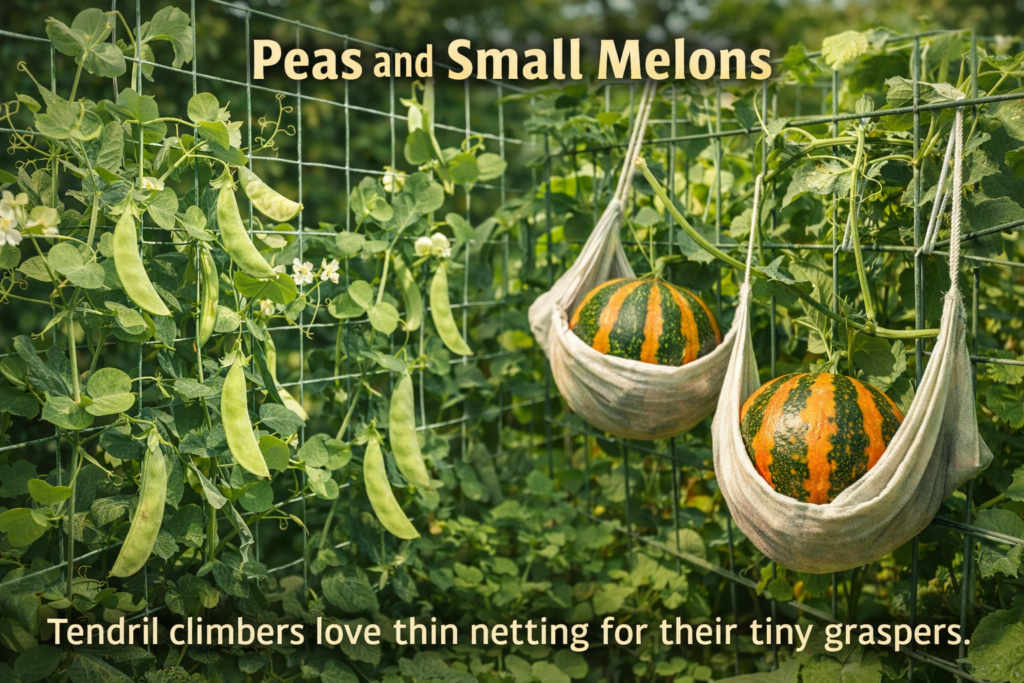
Some plants are like little mountain climbers equipped with high-tech sensors. They use tendrils—tiny, thread-like arms—that reach out in a circular motion, literally “searching” the air for a support to grab onto. Once a tendril touches a wire or a branch, it undergoes a rapid chemical reaction that causes it to curl and tighten in a matter of minutes.
Best Veggies: Snap peas, snow peas, and small “personal-sized” melons like the Kajari Melon.
The Pro Secret: These plants have a “Goldilocks” rule for their support. If the wire or string is too thick, their tiny tendrils can’t wrap around it. They love thin netting or chicken wire.
Unique Pick: Try the Kajari Melon. It’s a stunning heirloom from India that actually “pops” off the vine the second it’s ripe, so you don’t have to guess when to harvest!
2. The “Huggers”: Pole Beans and Cucumbers
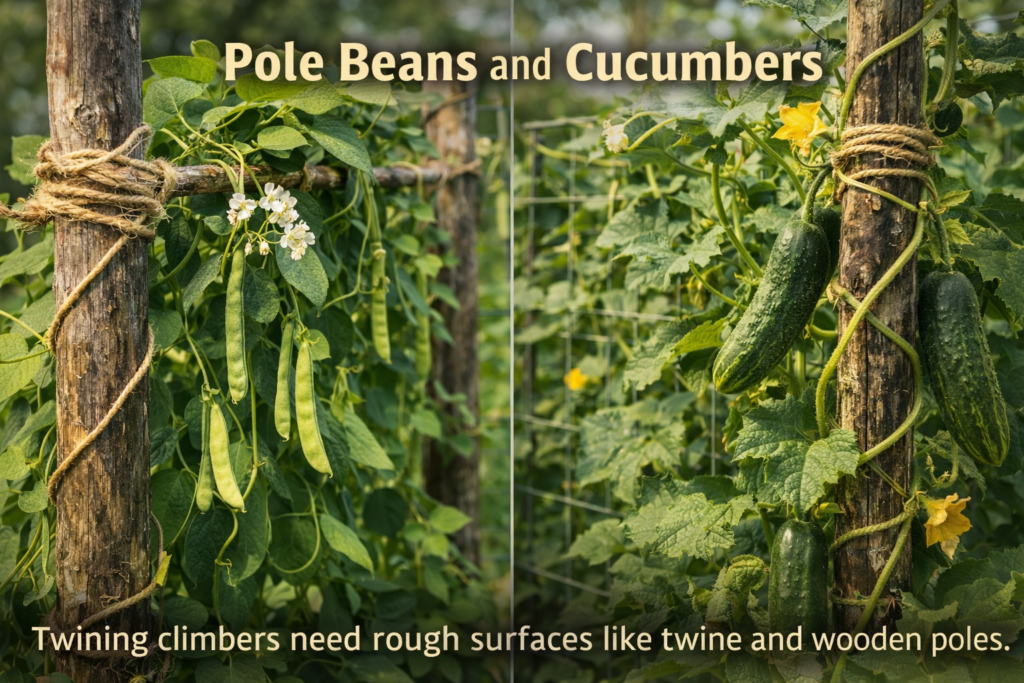
While the “Graspers” use extra little arms to hold on, these plants take a much more direct approach. Instead of growing specialized tendrils, they use their entire main stems to wrap tightly around their support as they grow. Think of them like a living spiral staircase; they essentially “hug” their way to the top by twisting their whole body in a circle. Because they rely on this squeezing force to stay upright, they are incredibly strong once they get a few loops established.
Best Veggies: Pole beans (not “bush” beans!), cucumbers, and Malabar spinach.
The Pro Secret: These guys rely on friction. They like rougher surfaces like wooden poles or sturdy twine. If your support is too slippery (like smooth plastic), they might slide down under their own weight.
Unique Pick: Malabar Spinach. It’s not actually spinach, but a beautiful, purple-stemmed vine that loves the heat. If you live somewhere where regular spinach wilts in five minutes, this is your new best friend.
3. The “Heavyweights”: Squash and Pumpkins
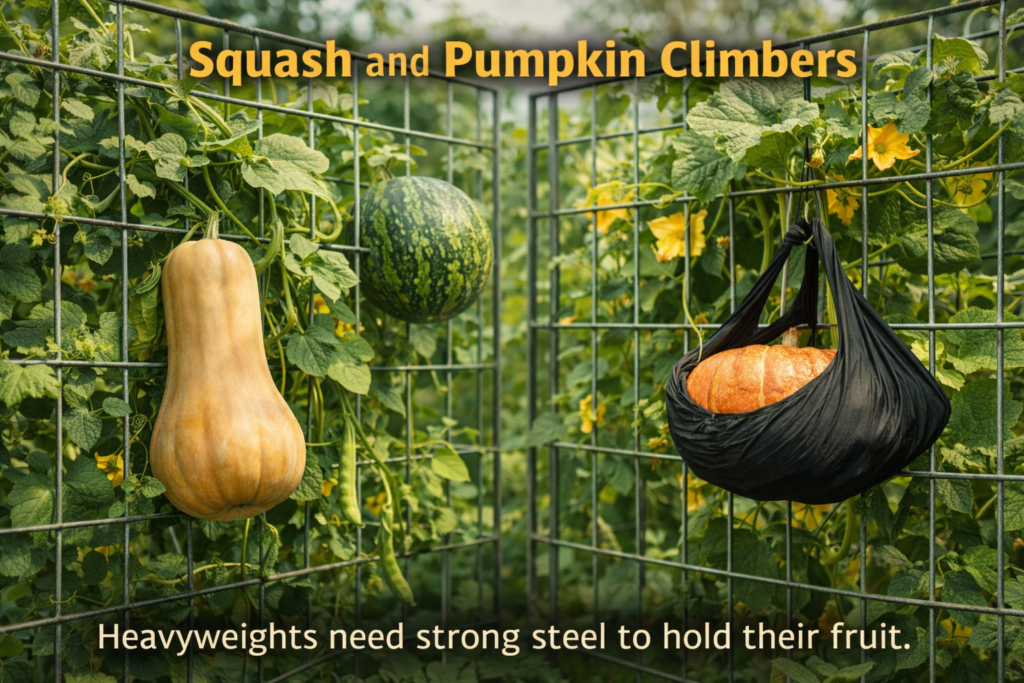
In contrast to the nimble climbers above, these larger plants are often “scramblers.” While pumpkins and squash are capable of reaching Olympic heights, they don’t always have a sophisticated grip. They mostly use heavy stems and a few thick tendrils to lean against their support. Without a “sturdy skeleton” to catch their weight, they’ll default to sprawling on the ground, which is an open invitation for pests. Since they aren’t quite as graceful, they rely on a strong structure to handle the sheer physics of their growth.
Best Veggies: Butternut squash, small pumpkins, and the Shark Fin Melon.
The Pro Secret: Don’t use flimsy plastic netting here. Go to a farm supply store and get a Cattle Panel. These are heavy-duty steel grids that won’t sag when your squash gets big. Because scramblers aren’t as agile, you may need to manually “weave” or tie the heavy stems to the panel as they grow to ensure they don’t slump.
Unique Pick: The Shark Fin Melon. This plant is legendary in gardening circles for being “freaking crazy” in its growth. It’s incredibly pest-resistant and produces a massive harvest that lasts for months in storage.
Creative Ideas for Your First Setup
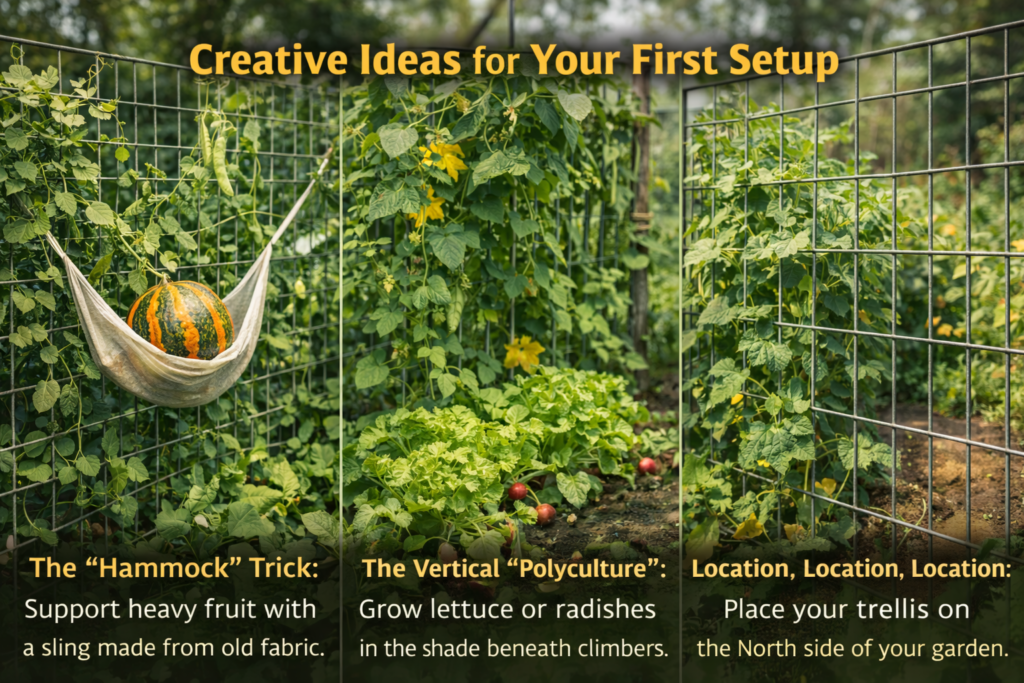
If you’re just starting, here are three tips to ensure your first year isn’t your last:
The “Hammock” Trick: If you’re growing something heavy like a melon, it might snap off the vine before it’s ripe. Use an old T-shirt or a pair of pantyhose to make a “sling” or hammock for the fruit. Tie it to the trellis so the metal structure carries the weight, not the plant’s stem.
Location, Location, Location: A trellis is basically a big green wall. Make sure you place it on the North side of your garden. If you put it on the South side, it will cast a shadow over everything else you’re trying to grow!
The Vertical “Polyculture”: You can actually grow two things in one spot. Plant your tall climbers on the trellis, and then plant lettuce or radishes in the “footprint” at the base. The trellis provides shade that keeps your lettuce from getting too hot and turning bitter.
Want to Try Something Truly Unique?
If you’ve already mastered the basic cucumber, check out the Winged Bean (also called the Dragon Bean). It’s a vertical powerhouse where every single part of the plant—the leaves, the flowers, the beans, and even the roots—is edible. It’s like a whole grocery store on one trellis!