10 Surprising Benefits of Vertical Gardening to Spur Growth
Vertical gardening is exactly what it sounds like: growing plants upward instead of spreading them across the ground. You’ve probably seen beautiful vertical gardens on social media, balconies, or indoor walls.
But the real question is: Are vertical gardens actually better than traditional gardens?
The honest answer is yes and no. Vertical gardening has clear advantages, but it also serves specific needs. In this article, we’ll focus on the key benefits that make vertical gardening a great choice for many people.
Let’s get into it.
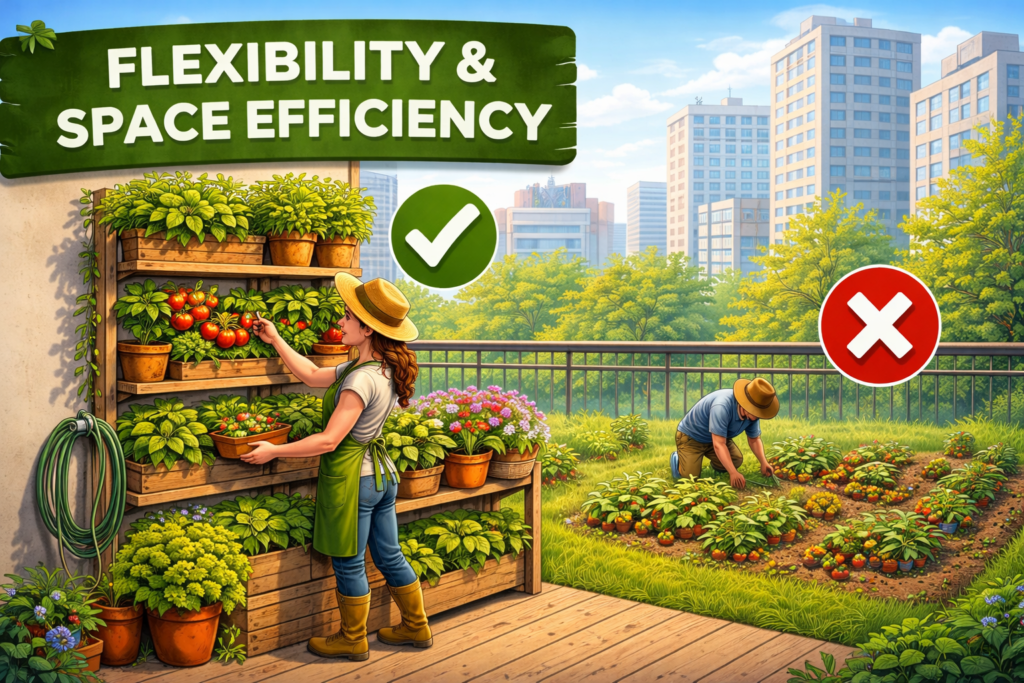
Flexibility and Space Efficiency
Traditional gardening requires a decent amount of space, which can be a major problem, especially for people living in apartments or small homes.
Vertical gardening solves this by using height as well as width. Instead of spreading plants across the ground, you stack or mount them upward, allowing you to grow more plants in a much smaller area.
Vertical gardens are also visually appealing. They can function as a small food source while doubling as home décor at the same time.
On top of that, vertical gardens are easier to manage because plants are more accessible, making everyday care simpler.
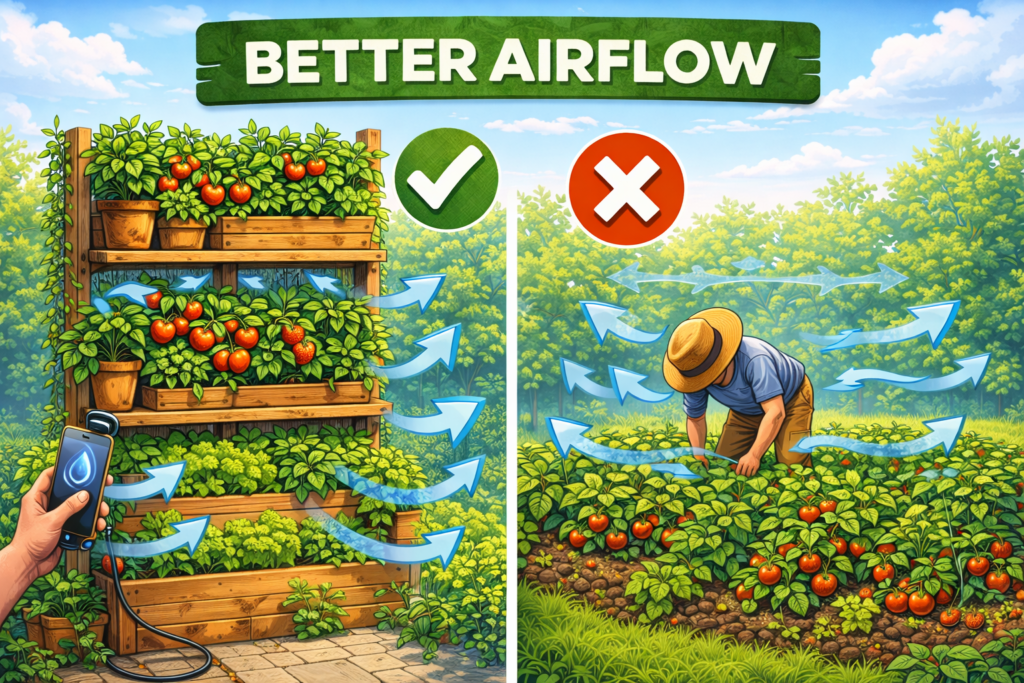
Better Airflow
When plants are grown vertically, air can move around them more freely. This improved airflow helps keep plants healthier and reduces the risk of diseases.
In traditional gardens, plants can become overcrowded, which limits air circulation and sometimes leads to plant damage or death.
Easier individual plant care
In ground-level gardens, it’s easy to overlook certain plants, especially when everything is packed together.
Vertical gardening gives each plant its own space, making it much easier to monitor growth, spot problems early, and provide individual care when needed.
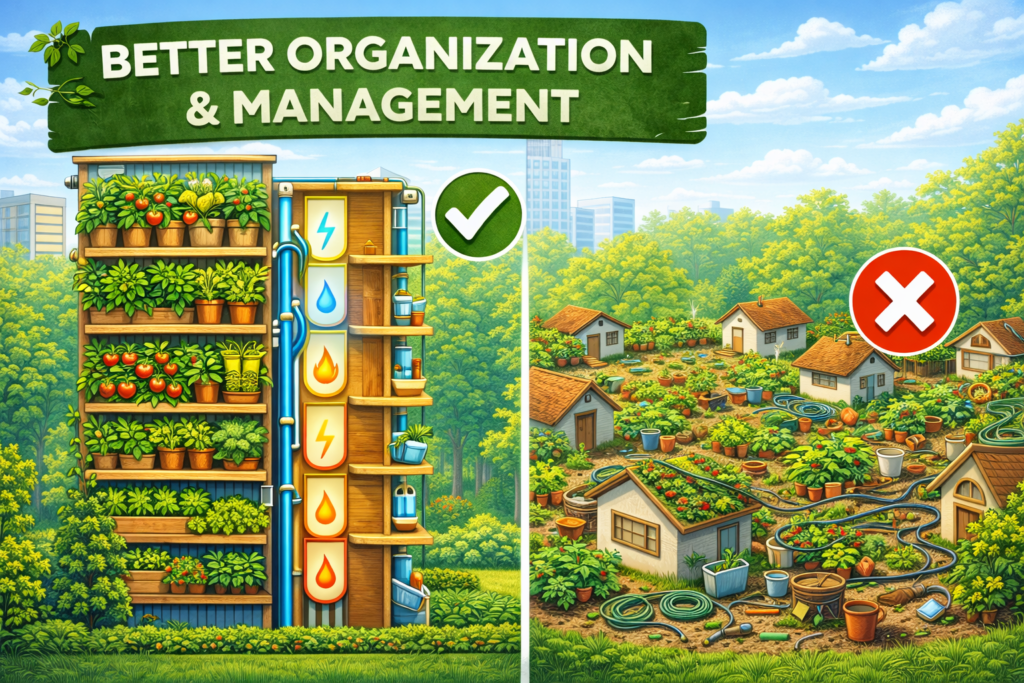
Better organization and management
Think of traditional gardening as a crowded field of single-story buildings. Vertical gardening, on the other hand, is like a well-planned multi-story apartment with organized systems.
Watering, spacing, and plant placement are more structured, which leads to a cleaner, more manageable garden overall.
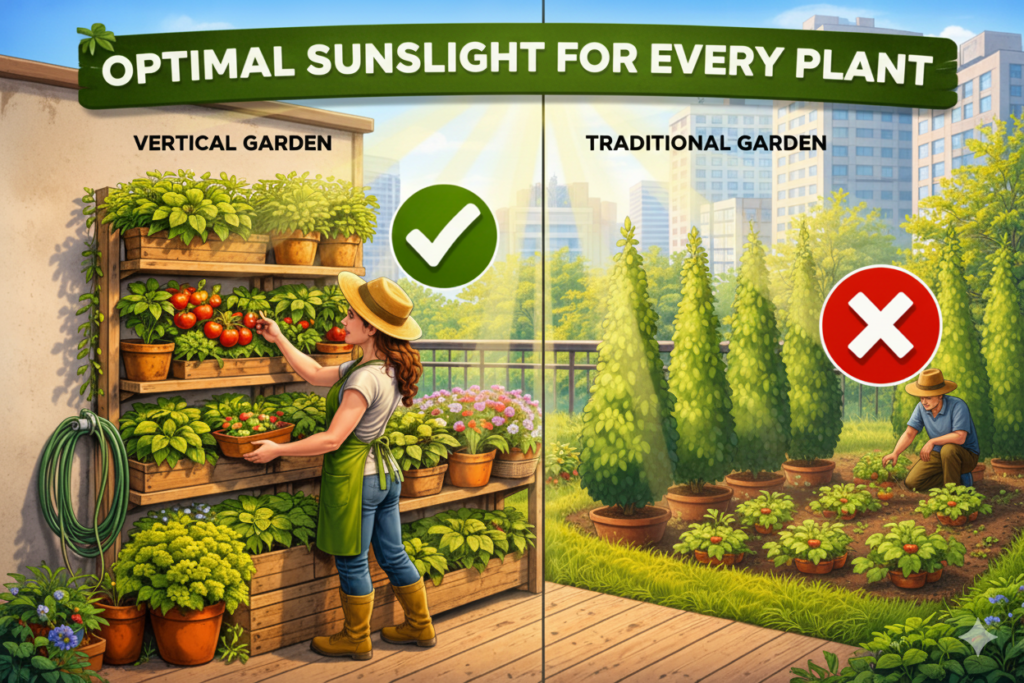
Improved sunlight exposure
In traditional gardens, taller plants often block sunlight from shorter ones.
With vertical gardening, adjusting plant placement for optimal sunlight is much easier. This helps ensure every plant gets the light it needs to grow properly
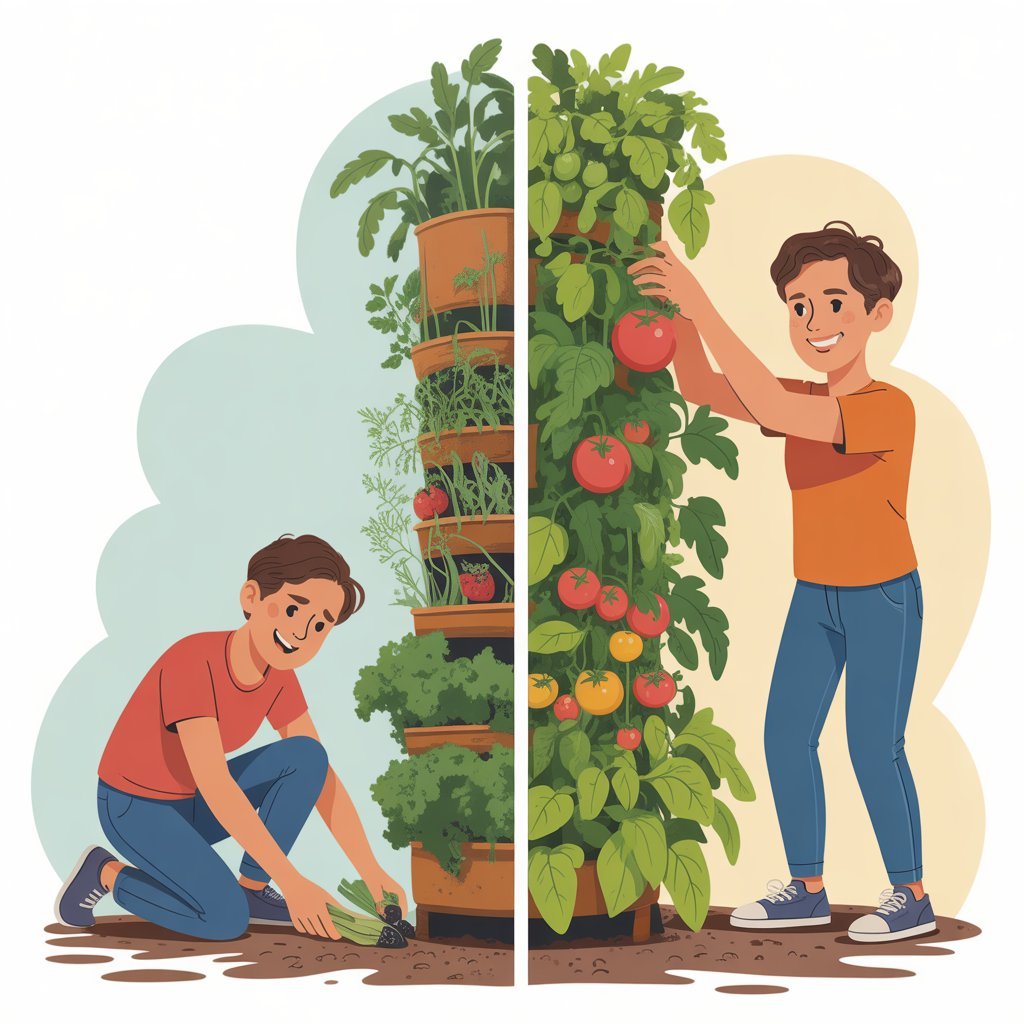
less kneeling and physical strain
Harvesting from ground-level gardens often means constant bending or kneeling, which can be uncomfortable.
Vertical gardens place plants closer to waist or eye level, making harvesting feel more like picking produce from a shelf, simple and convenient.
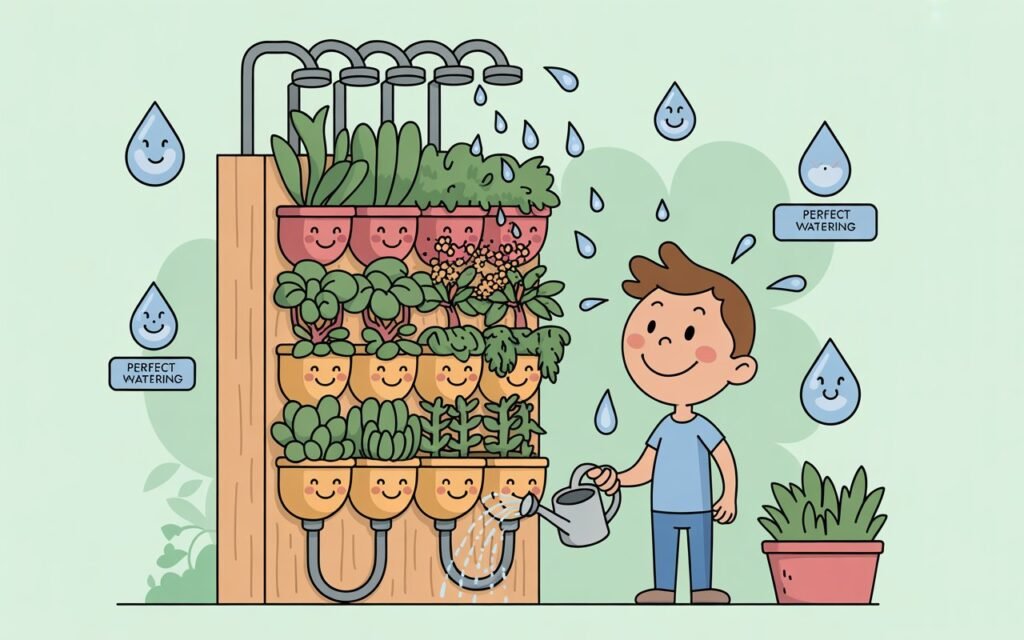
Controlled water supply
Beginners often struggle with overwatering or underwatering, both of which can kill plants.
Vertical gardens usually use irrigation systems, which deliver water evenly and automatically. Once set up, this system removes much of the guesswork from watering.
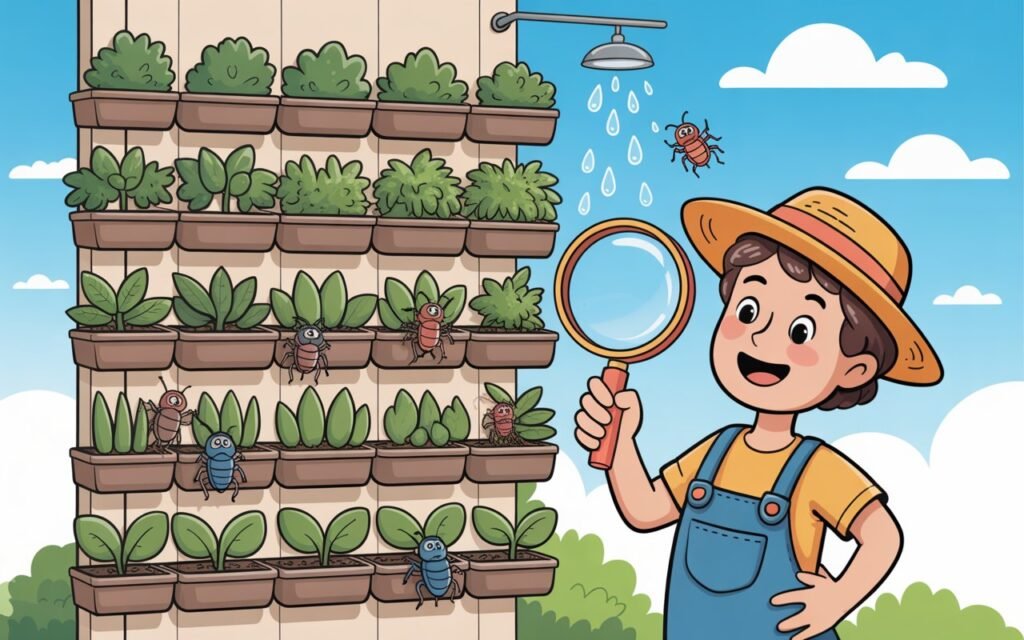
Better pest control
Vertical gardens limit hiding spaces for pests. Since plants are elevated and more exposed, pests are easier to spot and control.
With minimal effort, you can keep most harmful pests away from your garden.
Cost-effective
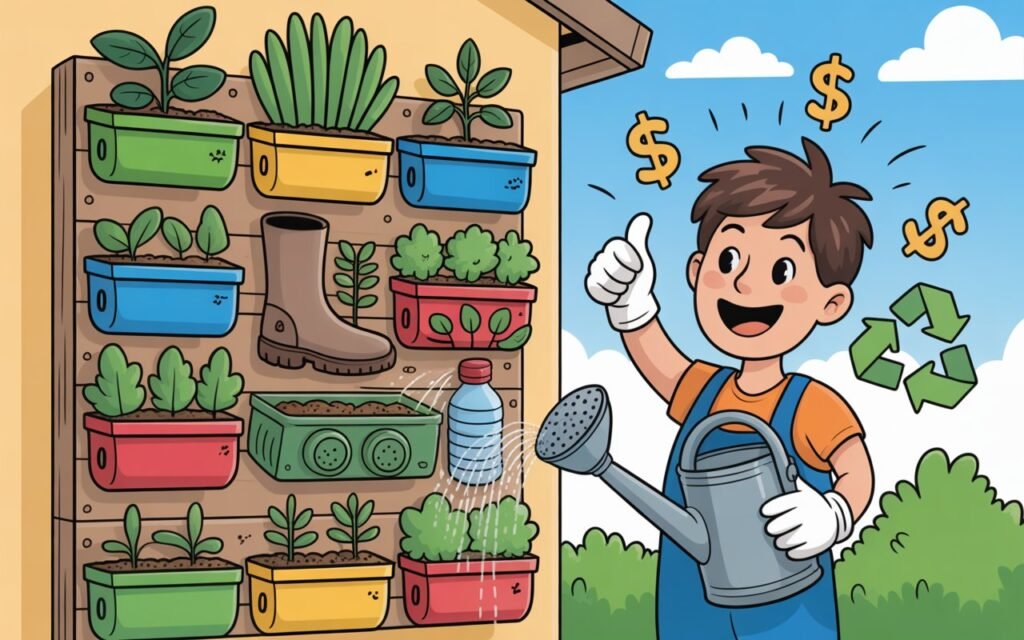
A vertical garden doesn’t have to be expensive. With recycled materials and basic tools, it’s possible to build one for very little or even zero cost.
This makes vertical gardening accessible to almost anyone.
Can be easily automated
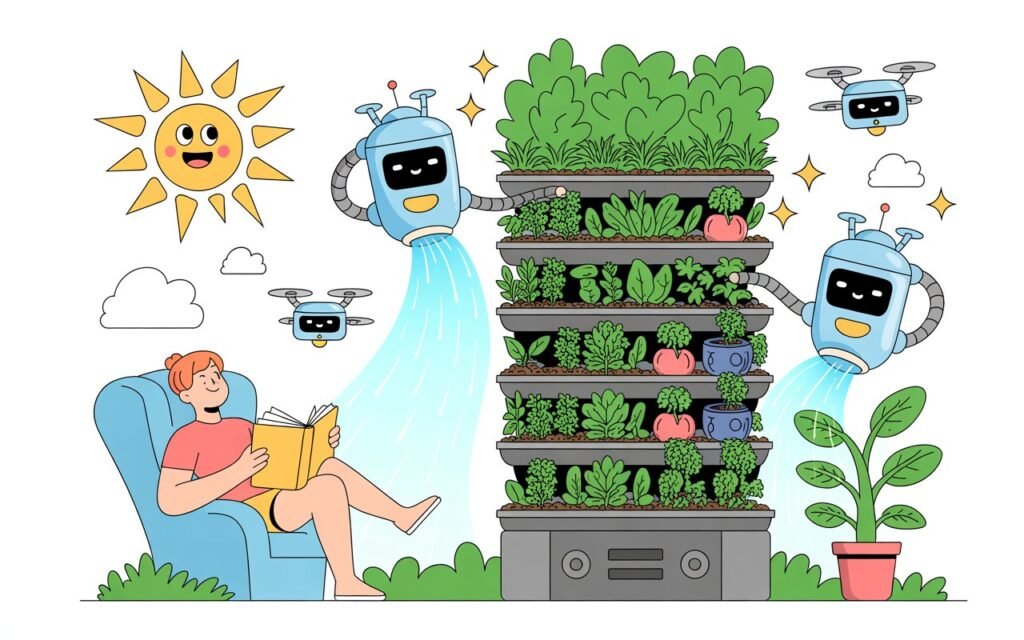
One of the biggest advantages of vertical gardening is automation.
Once properly set up, systems for watering, airflow, and sunlight can handle most of the work. Maintenance becomes minimal, making it ideal for people with busy schedules.