
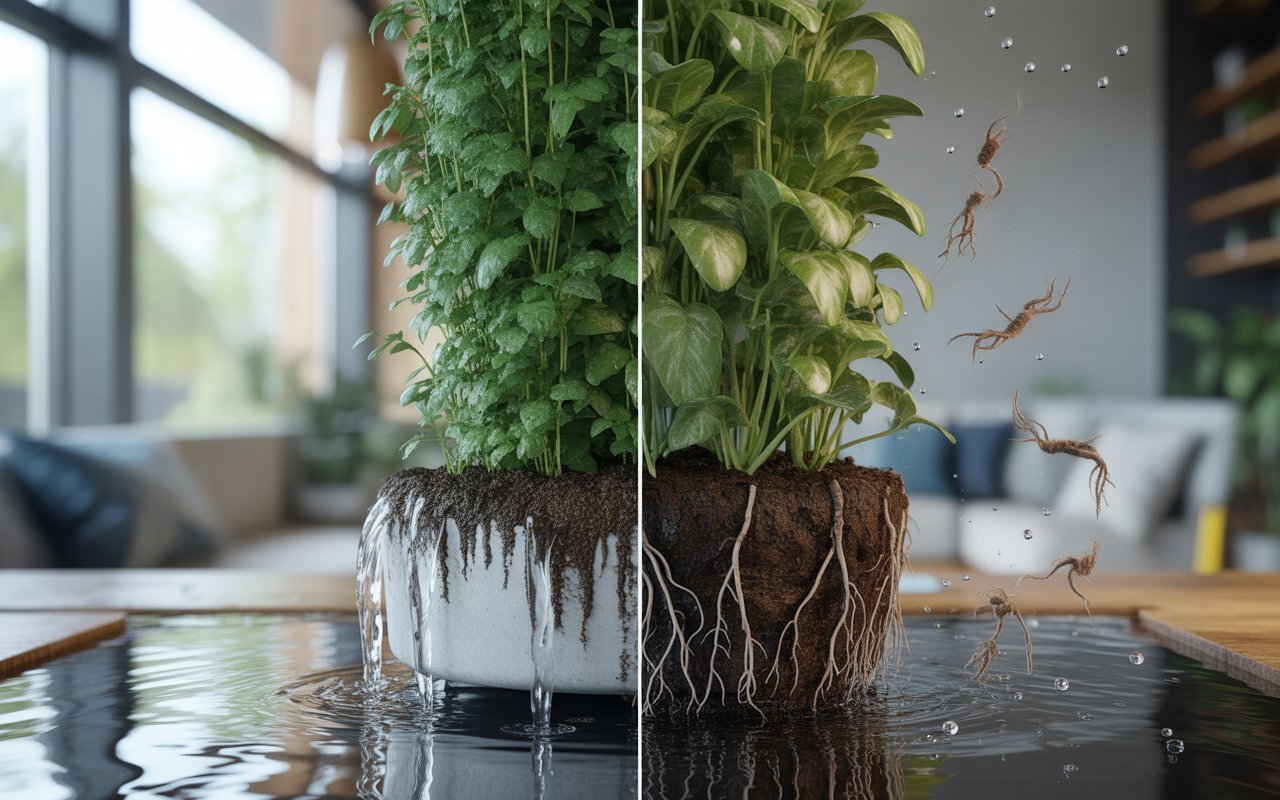
Vertical gardening is a dream come true for those of us with limited space. Whether you’ve got a lush “living wall” in your living room or a high-tech hydroponic tower on your balcony, there is something incredibly satisfying about growing upward.
But, as many of us have learned the hard way, vertical systems have a “silent killer”: root rot.
If you’ve ever noticed your plants looking yellow, wilting even when the soil is wet, or smelling a bit like a swamp, you’ve likely met this foe. As someone who has spent years troubleshooting these towers, I can tell you that root rot isn’t just “bad luck.” It’s a mix of biology, physics, and sometimes, our own well-intentioned overwatering.
Let’s dive into what’s actually happening behind the scenes and how you can keep your vertical garden thriving.
1. The “Water Molds”: Meet the Pathogens
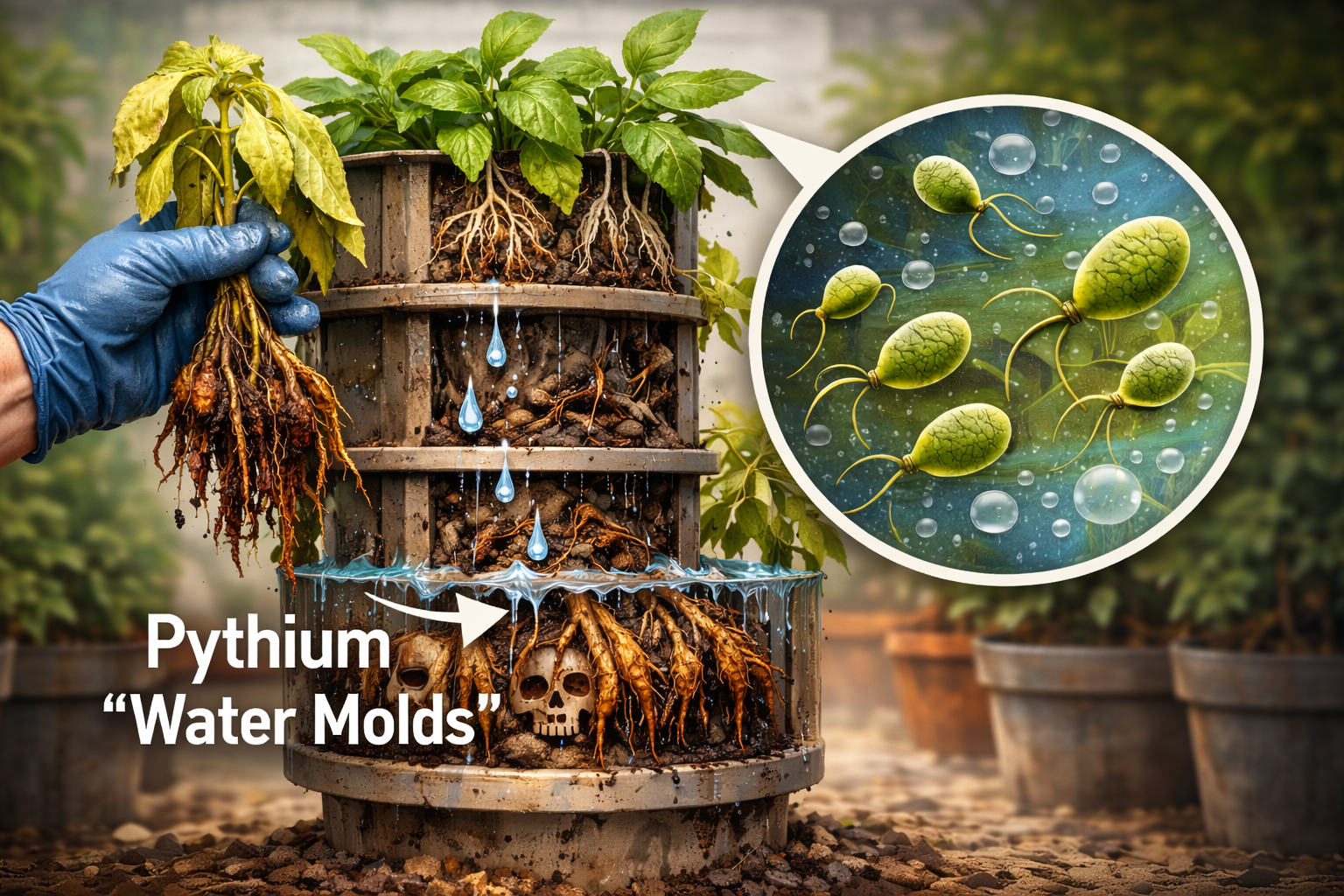
Root rot isn’t just one disease; it’s usually caused by a group of tiny organisms called Pythium. We often call them fungi, but they are actually “water molds.”
Think of them like tiny, Olympic swimmers. They produce “zoospores” that can actually propel themselves through water. In a vertical garden, this is a major problem because gravity is working against you. If a plant at the very top of your tower gets infected, those little swimmers hitch a ride on the water as it trickles down, potentially infecting every single plant in the system.
The Temperature Factor: Different “molds” like different weather. For example:
Warm weather ($>77^{\circ}\text{F}$): This is when Pythium aphanidermatum strikes, causing slimy, brown roots.
Cool weather ($<68^{\circ}\text{F}$): Pythium ultimum takes over, often killing off young seedlings before they even get a chance.
2. The Physics of the “Soggy Bottom”
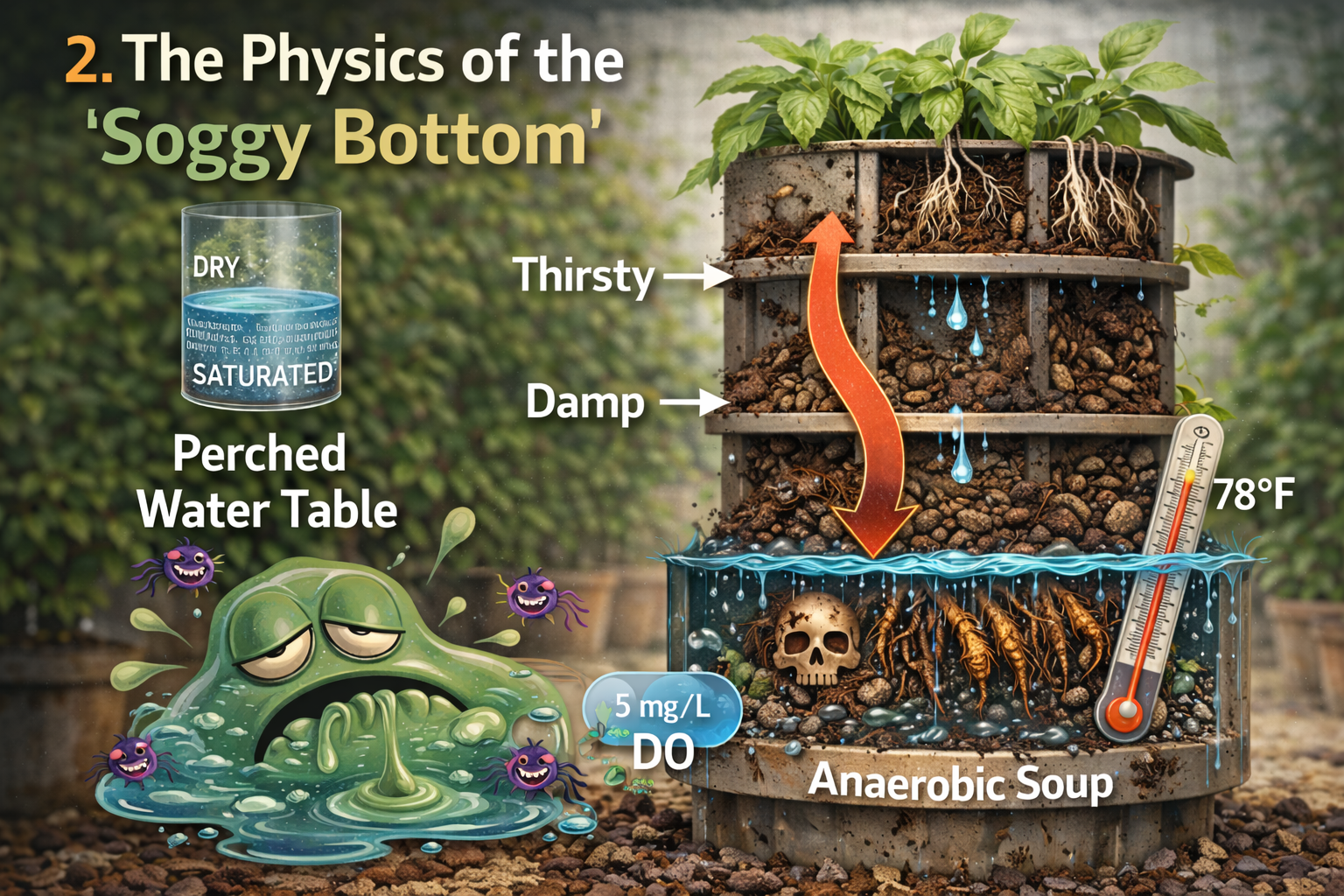
This is the part most people miss. In a standard horizontal garden, water spreads out. In a vertical garden, gravity pulls everything to the base.
There’s a phenomenon called the “perched water table.” Basically, while the plants at the top of your tower might be thirsty, the ones at the bottom are often sitting in an “anaerobic soup.” The water fills up all the tiny air pockets in the soil at the bottom. Without air, the roots can’t breathe. They literally suffocate, and that’s when the rot sets in.
If you’re using a “Nutrient Film Technique” (NFT) system—where water flows in a thin sheet—the water loses a little bit of oxygen at every level. By the time it reaches the bottom floor, it’s “stale,” making it the perfect playground for rot.
3. Humidity and the “Sweat” Factor
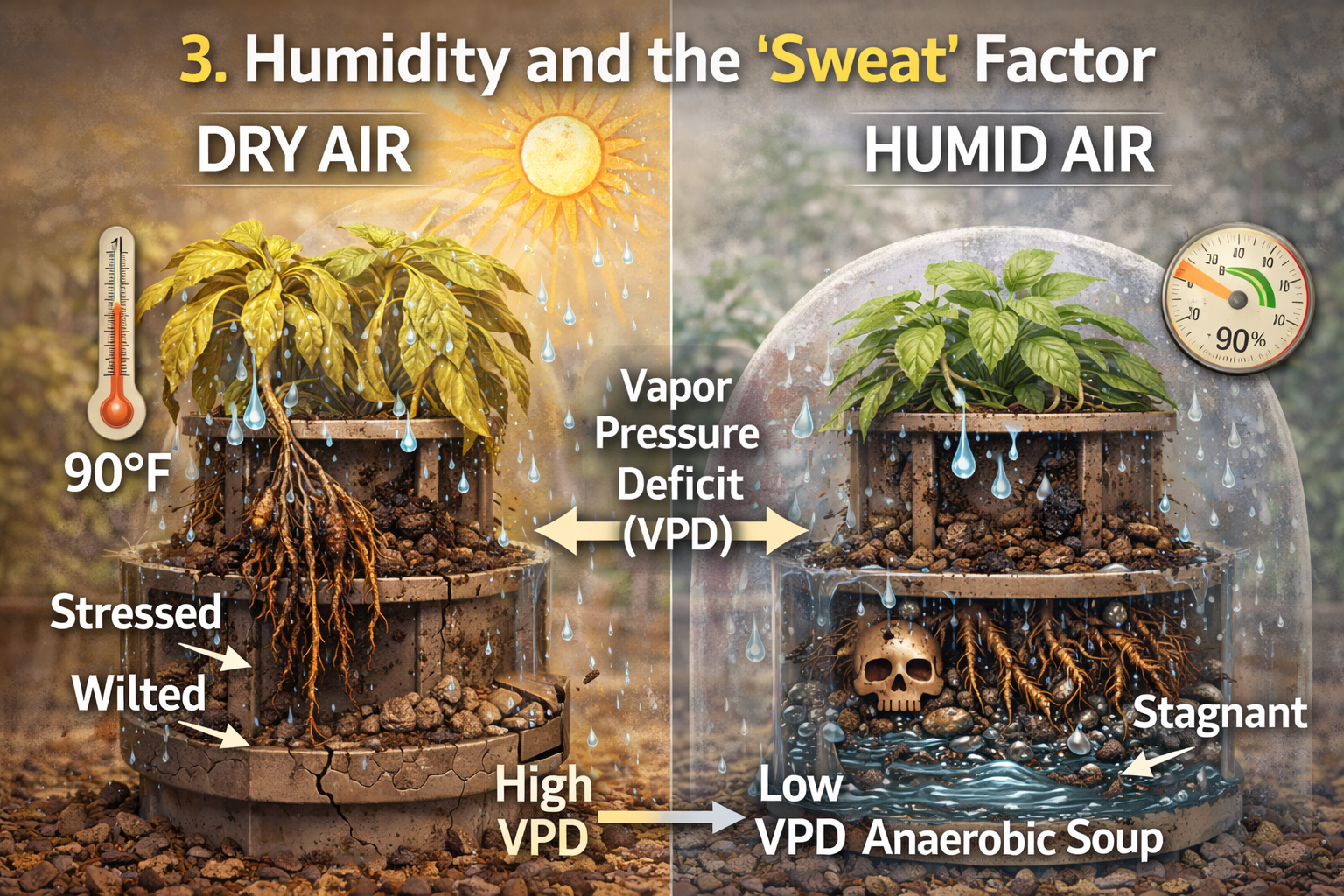
Plants breathe and “sweat” through a process called transpiration. This is driven by something called Vapor Pressure Deficit (VPD).
When the air is too dry: The plant tries to sweat too much. If the roots are already a little sick, they can’t keep up, and the plant wilts.
When the air is too humid: The plant can’t sweat at all. Everything becomes stagnant. Fresh, oxygen-rich water can’t be pulled up into the roots, and the whole system stalls out.
4. How to Spot the Trouble (The “Low-Tech” Way)
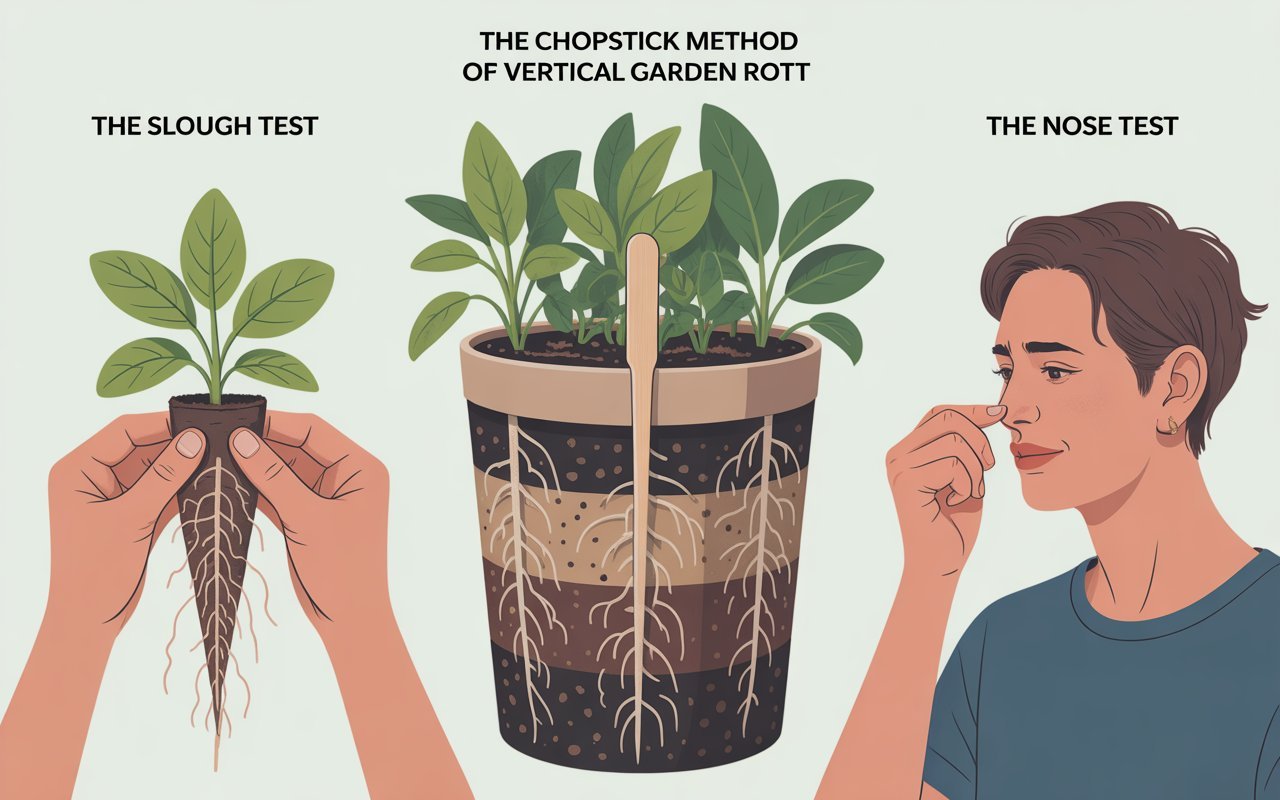
You don’t need a lab to diagnose root rot. Here are three tricks I use:
The Slough Test: Gently pull on a root. If the outer “skin” slides off like a wet sleeve, leaving a thin wire-like strand behind, it’s rot.
The Chopstick Method: Stick a wooden skewer into the bottom tier of your garden. If it comes out dark and soaking wet while the top feels dry, your vertical gradient is out of whack.
The Nose Test: Healthy roots should smell like fresh earth or nothing at all. If it smells like a wet basement or sulfur, you’ve got anaerobic bacteria moving in.
5. Proactive Strategies: Your Root Rot Toolkit
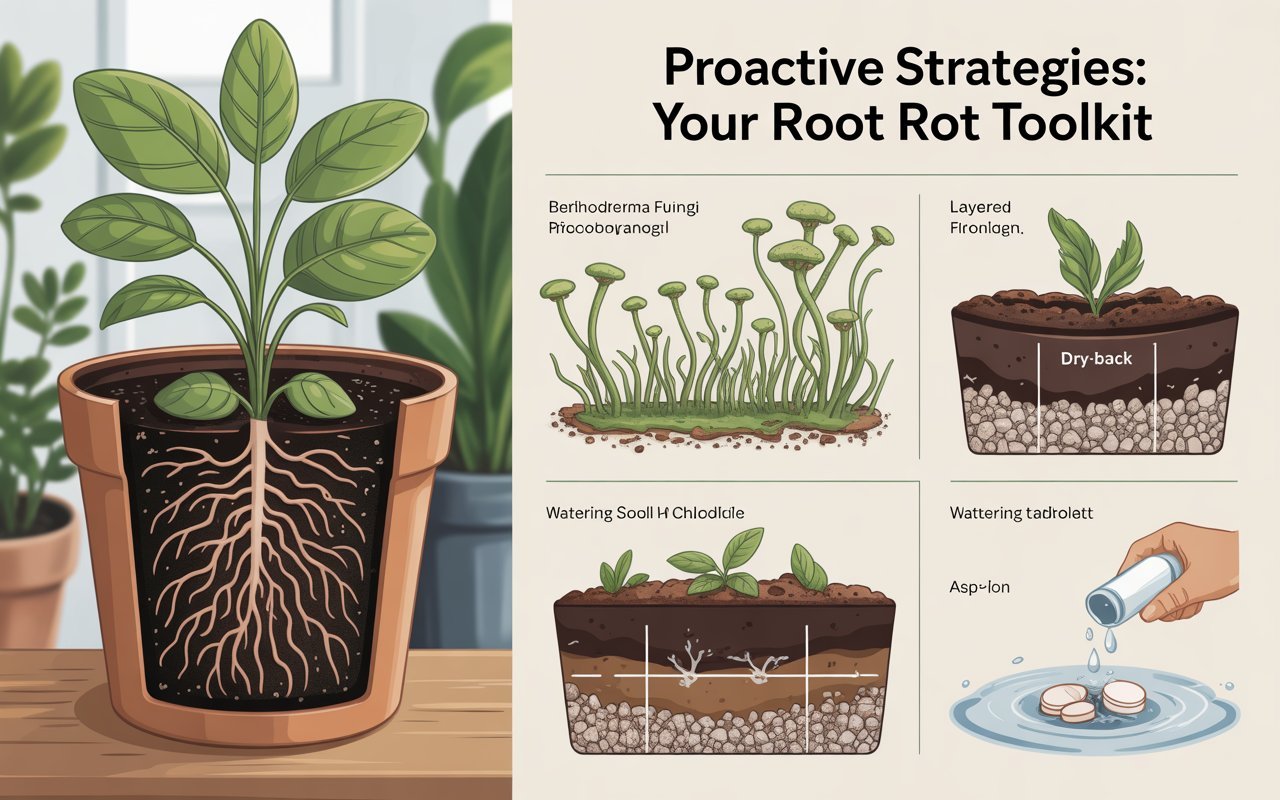
So, how do we fix it? It’s better to be a “plant bodyguard” than a “plant doctor.”
Bring in the Good Guys: I always recommend inoculating your plants with Trichoderma. This is a beneficial fungus that actually eats the “bad” rot-causing molds. It’s like hiring a security team for your roots.
Engineering the Soil: Don’t use the same soil all the way down. Use a “stratified” approach: put coarser, rocks-like material (like perlite or gravel) in the bottom half of your containers. This helps the water drain faster where gravity is strongest.
The “Dry-Back”: Don’t keep your plants constantly soaked. Let the substrate dry out a little bit (about 10%) between waterings. This “breath of air” kills off the pathogens that need constant wetness to survive.
The Aspirin Trick: It sounds like an old wives’ tale, but a crushed aspirin in water can actually “prime” a plant’s immune system, making it tougher against infections.
Final Thoughts

Root rot in a vertical garden can be frustrating, but it’s really just a sign that the balance of water and air has tipped too far one way. By watching your temperatures, ensuring the bottom tiers aren’t drowning, and using some “good microbes” for protection, you can keep your vertical oasis green and healthy.
Remember: every experienced gardener has a “graveyard” of plants they’ve lost. The secret to a green thumb isn’t never failing—it’s learning why the rot happened and adjusting for the next season!