
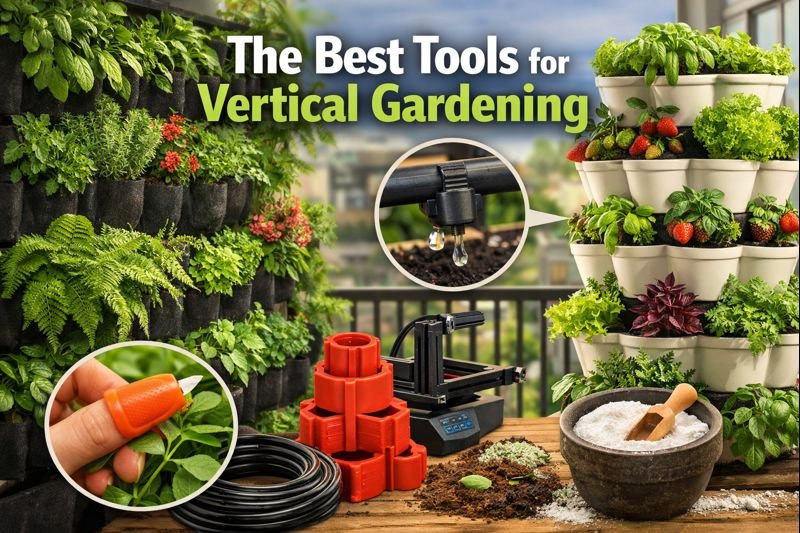
If you’ve already dipped your toes into the world of vertical gardening, you know it’s a bit more complex than just stacking pots. It’s a beautiful way to transform a blank wall into a living tapestry, but once you move past the basics, you start to realize that vertical gardening is really a game of physics. Between managing water flow against gravity and ensuring your wall doesn’t come crashing down under its own weight, the right tools make all the difference.
Whether you’re looking to upgrade your balcony setup or build a professional-grade herb wall, here are the best tools to enhance your vertical gardening experience.
1. The Right Emitters for Gravity-Fed Irrigation
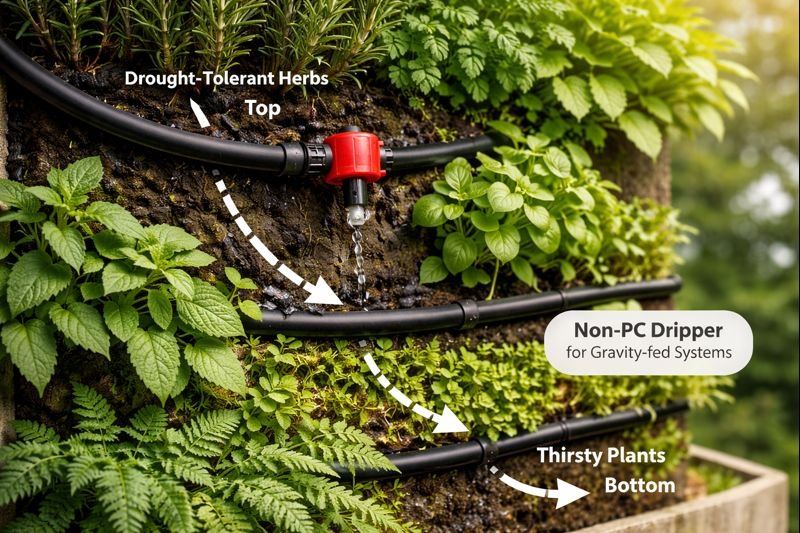
Most of us start with a gravity-fed system because it’s simple and affordable. However, here’s a common trap: standard “pressure-compensating” (PC) emitters often won’t even open if your water tank isn’t high enough to create significant pressure.
To keep your plants happy, you should look for Non-Pressure-Compensating (Non-PC) emitters or turbulent-flow drippers. These tools are designed to work at near-zero pressure. Because water naturally wants to rush to the bottom, try “hydro-zoning” your plants: put your thirstiest greens (like ferns) at the bottom and your drought-tolerant herbs (like rosemary) at the top. This turns a gravity challenge into a smart watering strategy.
2. High-Density Polyethylene (HDPE) Towers
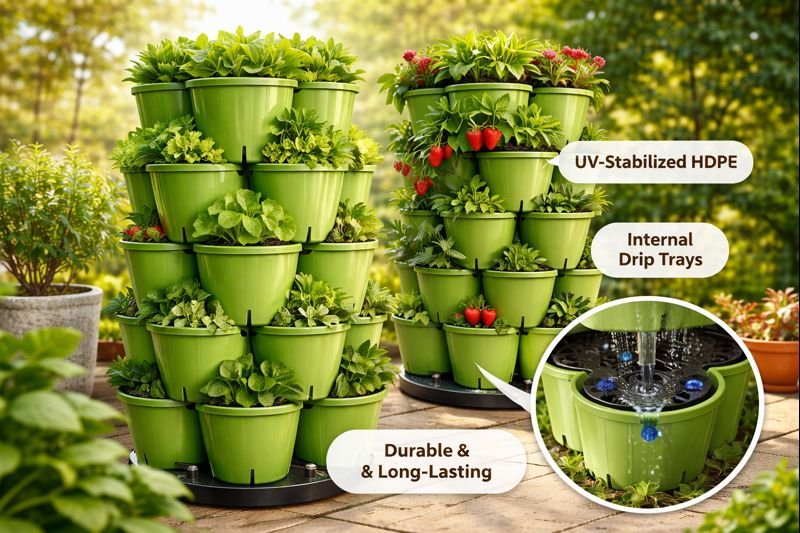
We’ve all seen those tempting, cheap plastic towers at big-box stores. Unfortunately, many of them aren’t built for the long haul. Standard plastics can become brittle and crack after just one season in the sun.
If you want a tool that lasts, look for systems made from UV-stabilized HDPE, like the GreenStalk towers. These are engineered to withstand years of sun exposure. More importantly, high-quality towers include internal drip trays. This ensures that water is delivered to the center of every pocket rather than just spilling down the outside of the tower, which is the secret to uniform growth.
3. PET Felt Pockets and Wicking Systems
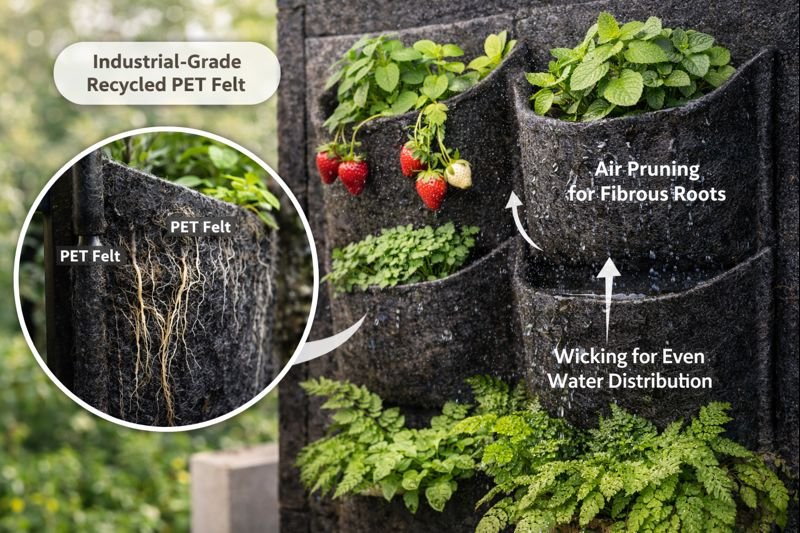
For those who want that “green wall” look, industrial-grade recycled PET felt (like Florafelt) is a game-changer. Unlike plastic pots, these felt pockets allow for “air pruning.” When roots reach the breathable fabric, they stop growing in circles and instead create a dense, fibrous root system.
Furthermore, these systems use capillary action to “wick” moisture across the surface, mimicking a natural mossy cliff. Just a pro-tip for indoor gardeners: make sure your felt system has a built-in moisture barrier on the back to protect your drywall from “sweating.”
4. Precision Harvesting: The Silicone Thumb Knife
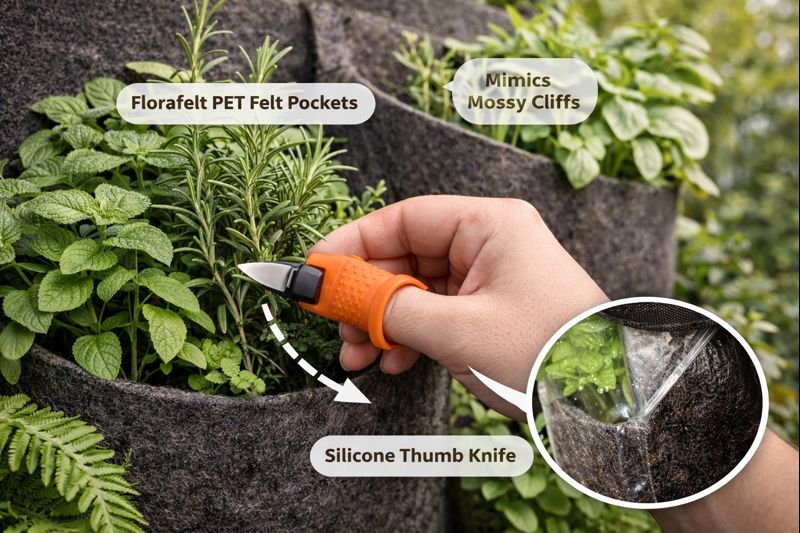
When your garden is a dense vertical jungle, reaching into a tight pocket with a pair of bulky garden shears is a recipe for accidental damage. This is where the silicone thumb knife comes in.
It’s a simple, inexpensive tool that fits over your thumb with a small blade at the tip. It allows you to “pinch” off herbs or deadhead flowers with one hand, giving you the precision you need in a high-density vertical environment. It’s one of those “hidden gems” that makes daily maintenance feel like a breeze.
5. Smart Materials for DIY and 3D Printing
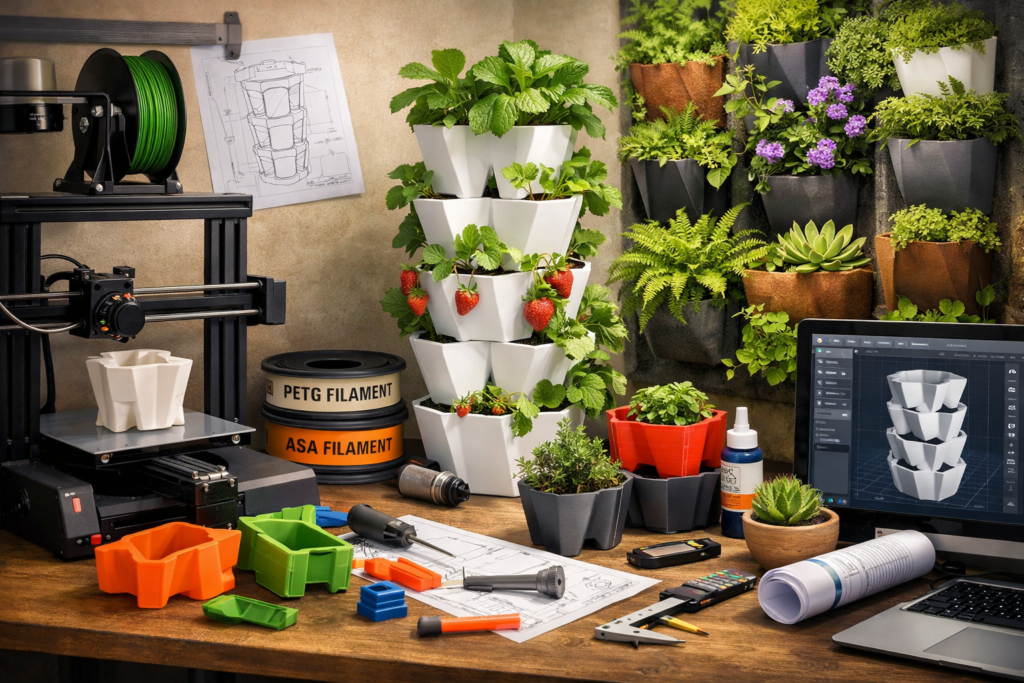
The DIY community has pioneered some incredible modular towers, often 3D-printed. If you’re going this route, the material you choose is everything. While many use PLA for indoor projects, it will eventually break down under moisture.
For a robust vertical garden, PETG or ASA filaments are the gold standard. They offer the UV resistance and structural toughness needed to hold up several feet of water and soil without leaking or warping over time.
6. The “Secret” Maintenance Tool: Citric Acid
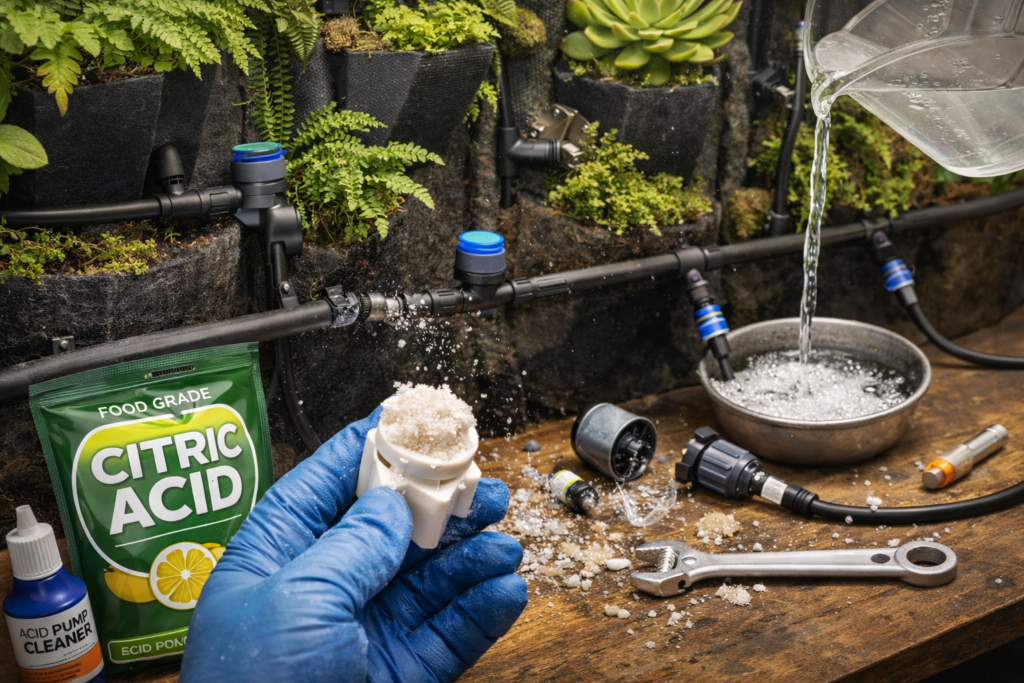
Even the best irrigation system will eventually face its greatest enemy: mineral buildup. If you notice white, chalky residue clogging your drippers, don’t throw them away.
Keeping a bag of food-safe citric acid on hand is the best way to keep your system running. A simple flush with a 20% citric acid solution dissolves calcium and magnesium deposits, turning them into a soluble liquid you can rinse away. It’s an easy way to ensure your pumps and lines stay clear for years.
A Final Thought on Structure

As you add more tools to your kit, always remember the “saturated weight.” A vertical garden gets significantly heavier after a deep watering. Always anchor your systems into structural studs or use a weighted base for towers.
By choosing tools that work with the physics of your space—rather than against it—you’ll spend less time troubleshooting and more time enjoying your vertical sanctuary. Happy gardening!