
If you’ve spent any time scrolling through gardening photos lately, you’ve probably seen those stunning “living walls” or futuristic towers overflowing with lush greens. They look like something out of a sci-fi movie where everyone lives in a perfect, eco-friendly utopia.
As someone who has spent years getting my hands dirty—and occasionally soaking my shoes because I messed up a vertical irrigation line—I get asked the same question all the time: “Is it just for show, or can I actually grow enough to feed my family?”
The short answer? You can grow a staggering amount of food. But the long answer is a bit more interesting. Success in vertical gardening isn’t just about having a green thumb; it’s about understanding a little bit of “garden physics.”
Let’s break down what determines your harvest and how you can push your vertical garden to its absolute limit.
1. Thinking in 3D: The Volume Secret
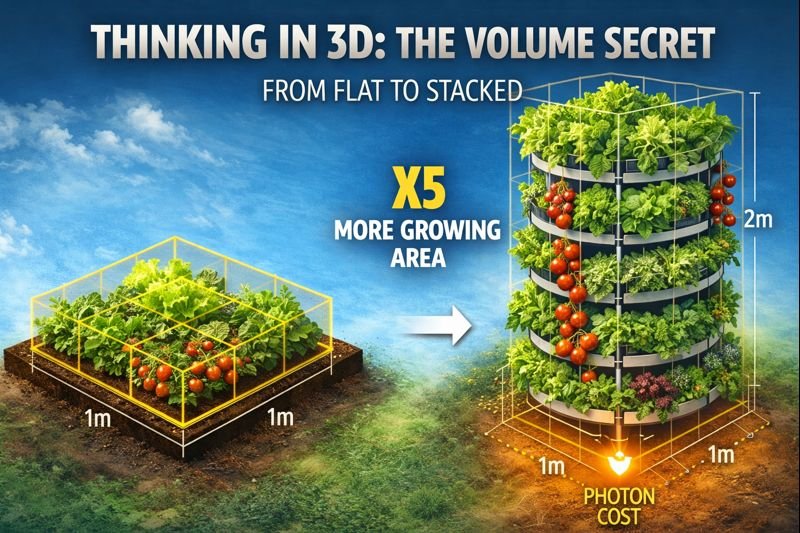
Most of us are used to thinking about gardening in square feet. We look at a patch of dirt on the ground and plan accordingly. In a vertical garden, we have to throw that out the window. We’re thinking in cubic meters.
By stacking plants, you are essentially “engineering” space. An industrial-style rack can produce up to five times the yield of a flat garden bed of the same size. But there’s a catch: The Photon Cost.
Plants need light to grow. When you stack them, the top plants act like a big umbrella, stealing light from the ones below. If you aren’t careful, the bottom 60% of your garden might end up being a “metabolic drain”—meaning they’re using energy to stay alive but not actually growing anything you can eat.
Pro Tip: Use mirrors or white-painted boards to bounce light into those dark corners. I’ve even seen folks in snowy climates use the reflection from snowbanks to double their winter light exposure. It’s a bit of “creative physics” that costs zero dollars.
2. The High-Value Choice: What to Plant
Here is the “reality check” I give every beginner: Don’t try to grow a field of potatoes in a vertical tower. Technically, you could, but the electricity cost to power the lights for heavy, starchy crops like potatoes or grains is astronomical. It would be the most expensive potato you’ve ever eaten.
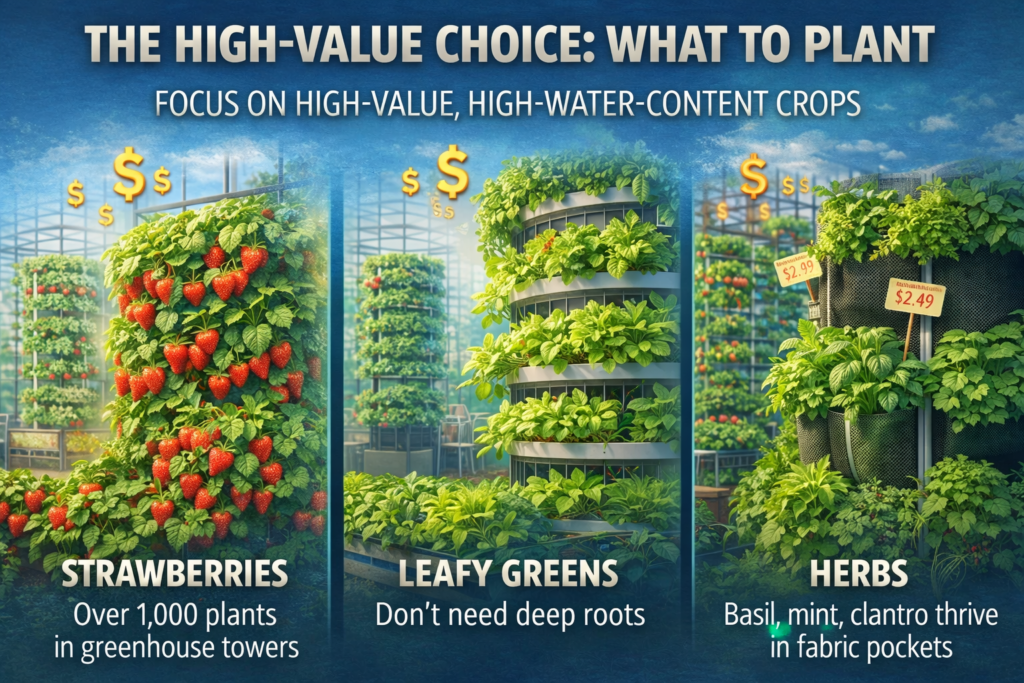
Instead, focus on high-value, high-water-content crops. Things like:
Strawberries: You can fit over a thousand plants in a well-managed greenhouse tower.
Leafy Greens: Lettuce and spinach are the kings of vertical growth because they don’t need deep roots.
Herbs: Basil, mint, and cilantro thrive in these systems and provide a massive “financial return” because they are so expensive at the store.
3. Taming Gravity: The Water Challenge
In a normal garden, you pour water on the ground and it stays there. In a vertical garden, gravity is your best friend and your worst enemy.
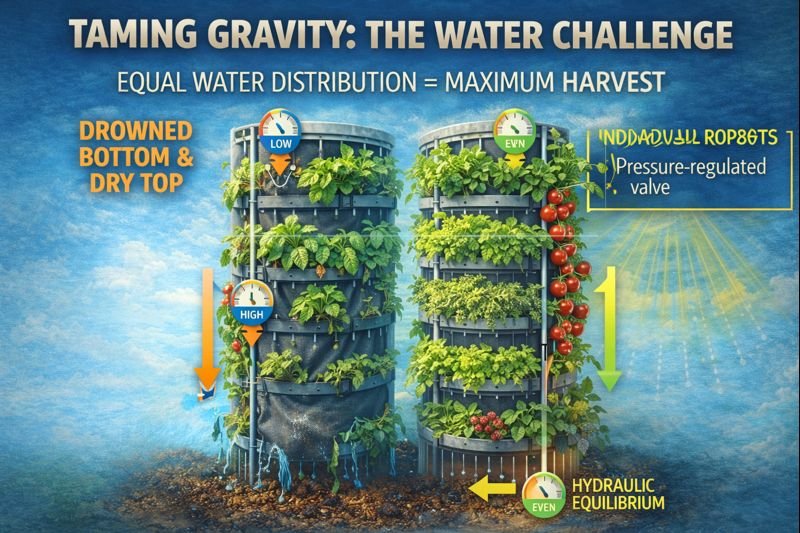
Because of the height, the water pressure at the bottom of a 3-meter tower is much higher than at the top. This often leads to a “drowned bottom and a dry top.”
If you want a huge harvest, you need Hydraulic Equilibrium. This is just a fancy way of saying you need to make sure every plant gets the same amount of “juice.” Using pressure-regulated valves ensures that your bottom plants don’t get all the nutrients while the top ones starve.
4. Giving the Roots Room to Breathe
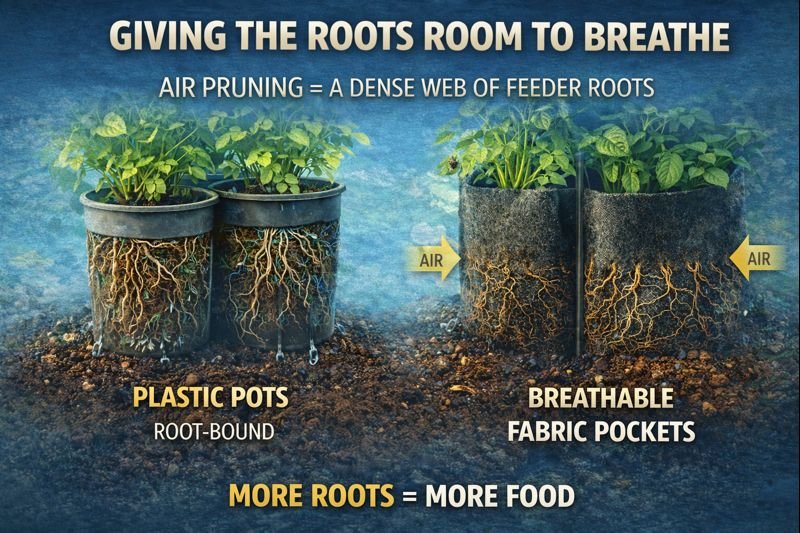
One of the biggest mistakes I see is using rigid plastic pots. Roots hit the side, start circling, and eventually suffocate the plant.
The secret to a massive harvest is Air Pruning. By using breathable felt or fabric pockets, the roots are exposed to air at the edges. This naturally “prunes” them, which sounds bad, but it actually forces the plant to grow a thick, dense web of feeder roots in the center. More roots = more food.
5. Your Garden as a “Living Radiator”
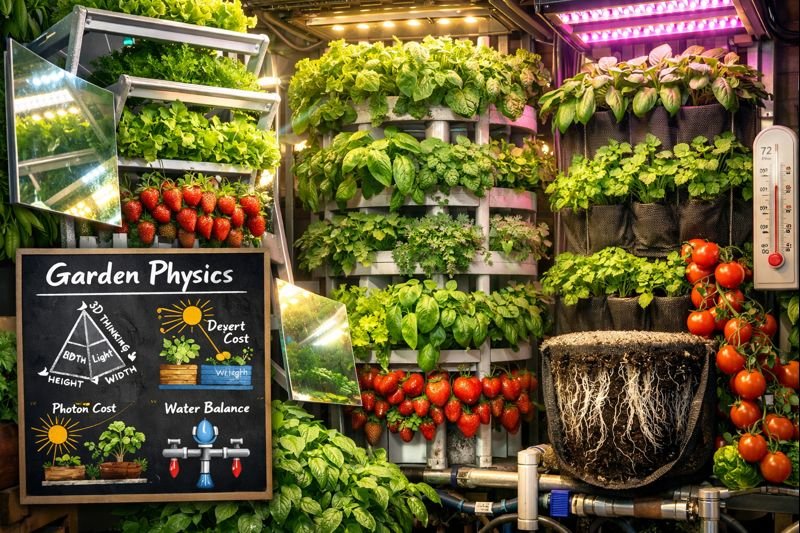
Here’s something most people don’t realize: Grow lights and plants produce heat. If you’re gardening indoors in a cold climate, your vertical garden isn’t just a food source—it’s a heater!
A standard rack of LED lights can produce enough heat to help warm a small room. By integrating your garden into your home’s “thermal envelope,” you’re essentially getting your food and your heating for the price of one.
The Bottom Line
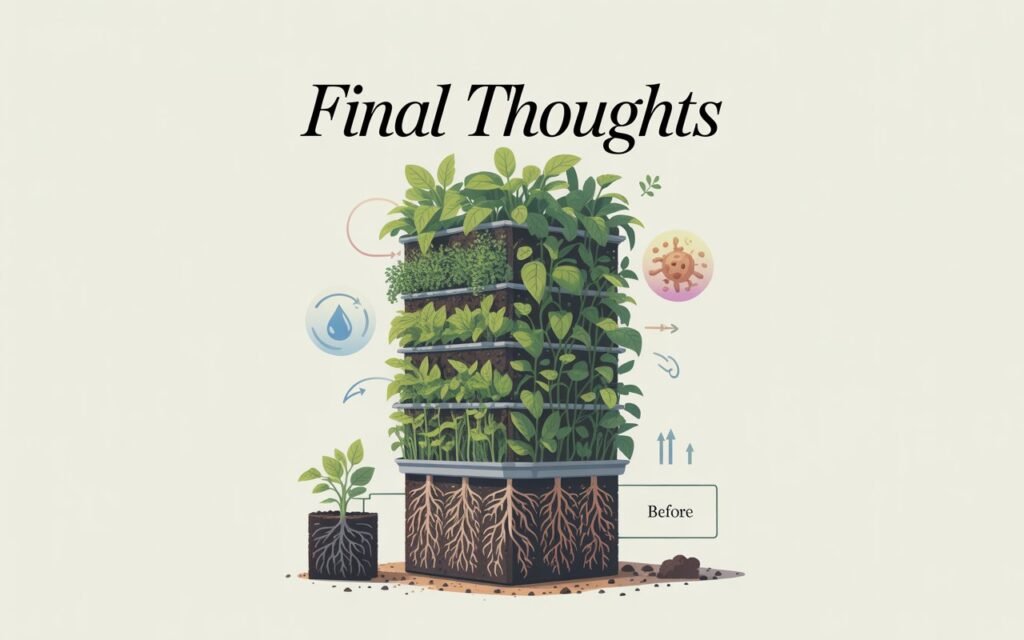
Can you grow 400 pounds of tomatoes or a continuous supply of lettuce in a tiny footprint? Yes. People are doing it in “SpaceBuckets” (essentially high-tech 5-gallon buckets) and industrial racks every day.
But remember, a vertical garden is a high-performance machine. It requires more “check-ins” than a backyard plot. You have to monitor the light, the nutrient flow, and the root health.
If you’re willing to put in the time to become the “master artisan” of your tower, the ceiling for what you can grow isn’t defined by the height of your wall—it’s only limited by your imagination (and maybe your power bill!).
Happy growing!