
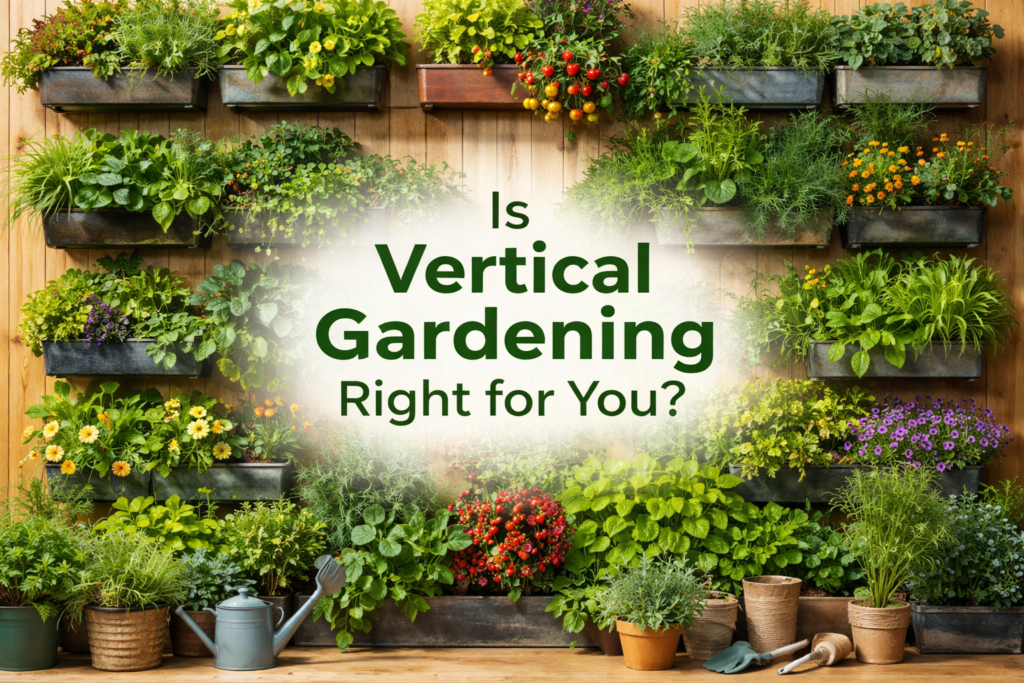
Vertical gardening is a modern gardening method that offers many benefits, especially in today’s rapidly urbanizing world. As cities grow and open space becomes limited, more people are turning toward vertical gardening as a practical solution. But is it the right choice for everyone? Not necessarily.
While vertical gardening can be highly rewarding, it also comes with its own challenges. It requires planning, patience, and a basic understanding of how the system works. Without that, it’s easy to end up with a poorly managed setup that wastes both time and money. To decide whether vertical gardening suits you, it’s important to understand its benefits, requirements, and limitations first. Only then can you make a confident and informed decision.
How Vertical Gardening Differs from Traditional Gardening
Vertical gardening focuses on using height as well as width to grow plants efficiently. Unlike traditional gardening, which spreads plants across the ground, vertical gardening allows plants to grow upward. There is no single fixed design for a vertical garden. The structure depends on factors like available space, budget, and the purpose of the garden, whether it’s for decoration, food production, or both.
Vertical gardens can take many forms, such as green walls, stacked planters, pocket systems, or hydroponic setups. While the designs may vary, the core idea remains the same: maximizing plant growth in limited space.
Traditional gardening works well for large plants, trees, and crops that need deep soil and open ground. For people living in apartments or small homes, this often isn’t realistic. Small pots and hanging plants can add some greenery, but they’re not very efficient if your goal is to grow food. This is where vertical gardening stands out.
By using techniques like hydroponic vertical systems or pocket-style planters, you can grow a surprising amount of produce in a very small area.
The Trade-Offs You Should Know About
Like any gardening method, vertical gardening has both advantages and disadvantages. One of its biggest strengths is its ability to produce more plants in less space. On top of that, vertical gardens can look visually stunning. This is why many hotels, offices, and luxury stores use green walls as part of their interior or exterior design.
However, vertical gardening isn’t always easy, especially for beginners. Setting up a system for the first time can be challenging, and maintaining it requires consistent attention. Because plants use less soil, moisture levels can become unstable. The soil may dry out too quickly or hold too much water, which can harm the plants.
Installing a proper irrigation system can solve this issue, but the setup varies depending on the type of vertical garden you choose. Often, some trial and error is unavoidable before you find what works best for your environment.
Another limitation is plant selection. Since each plant has limited soil space, you can’t grow everything in a vertical system. Root-heavy or large plants usually aren’t suitable.
Cost is another factor to consider. A full vertical gardening setup, especially one with irrigation or hydroponics, can be expensive. While DIY options exist, they often require technical knowledge and careful execution to avoid long-term problems.
That said, vertical gardening does offer flexibility. It can be done both indoors and outdoors, improves air circulation, and helps plants receive more even sunlight compared to crowded ground-level gardens.
Conclusion
If you have limited space and want to make the most of it, vertical gardening can be a great option. It’s especially useful for apartment dwellers or anyone looking to grow plants efficiently in a small area. While it does require effort and planning, the results can be both practical and visually rewarding.
Vertical gardening isn’t perfect but for the right person, it’s absolutely worth it