
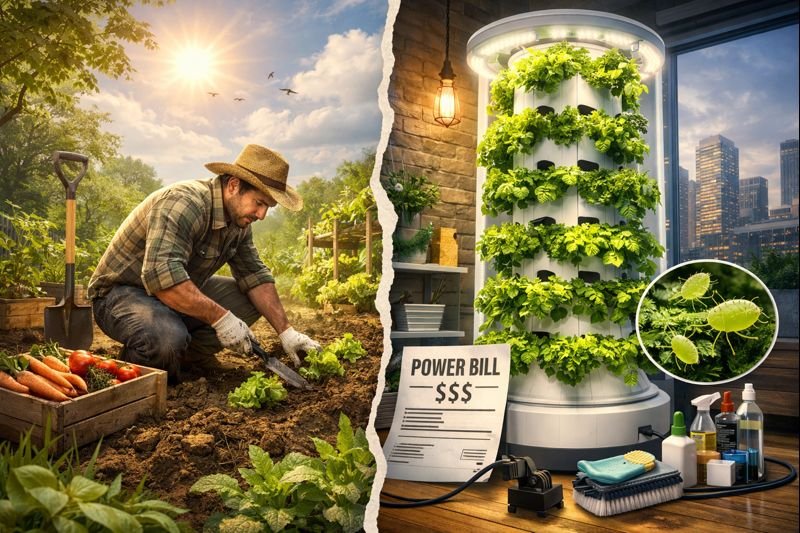
If you’ve spent any time scrolling through gardening forums or walking through modern urban neighborhoods lately, you’ve probably seen them: glowing towers of lettuce, lush green walls clinging to brick, and sleek “spaceship-like” setups inside living rooms. The marketing makes it sound like a dream—a messianic solution to small spaces and grocery bills.
But as someone who has spent years with my hands in both the dirt and the hydroponic pipes, I’m here to tell you that switching from a traditional horizontal garden to a vertical one isn’t just a change in direction. It’s a total shift in how you live with your plants.
Are you ready to make the jump? Let’s walk through the real-world realities together.
1. The “Photon Tax”: Trading Sun for a Utility Bill
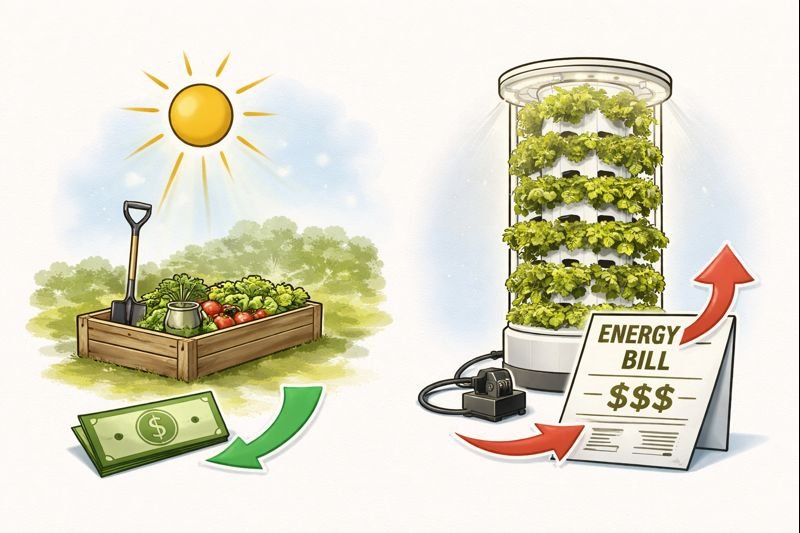
The biggest shock for most gardeners is the economic shift. In a traditional backyard plot, the sun provides free energy, and the soil acts as a natural buffer. When you move to a vertical system—especially indoors—you start paying a “photon tax.”
To keep those plants healthy, you’ll need high-intensity LEDs running 12 to 18 hours a day. While modern lights are efficient, they aren’t free. Depending on where you live, a single tower can add $10 to $20 to your monthly power bill. Plus, there’s the upfront cost. You can start a traditional garden for the price of a shovel and some seeds, but a high-end vertical tower can set you back $1,200 to $3,000. Before you switch, ask yourself if you’re ready for a hobby that comes with a monthly subscription fee.
2. Physics Matters: Moisture and Weight
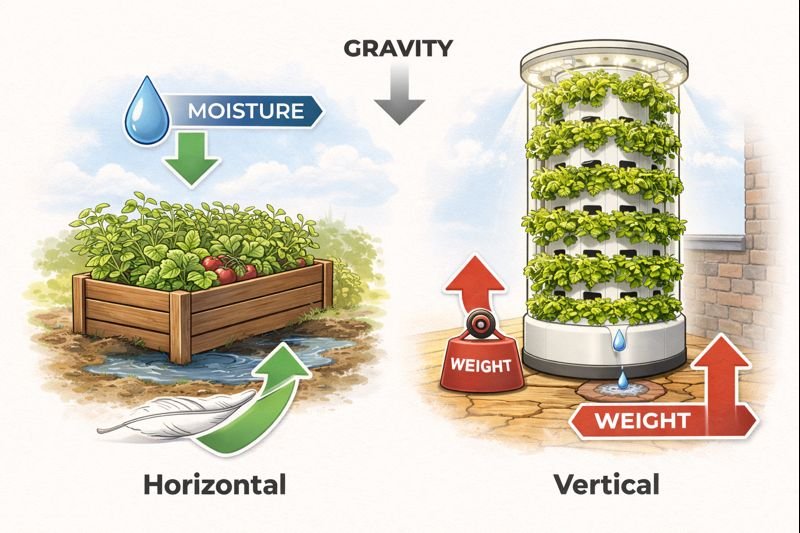
When we garden on the ground, gravity is our friend. In a vertical garden, gravity is something you’re constantly fighting.
If you’re planning a “living wall” inside your home, you have to be incredibly careful about moisture. A tiny leak behind a felt pocket can lead to structural rot or black mold before you even notice it’s happening. Then there’s the weight. A fully watered vertical planter can weigh over 150 lbs on a tiny footprint. If you’re gardening on an old wooden deck or a balcony, you need to check your load ratings first. Unlike a flower bed in the yard, a vertical tower can actually tip over in a heavy wind if it isn’t anchored properly.
3. “Doing Dishes” vs. Working the Land
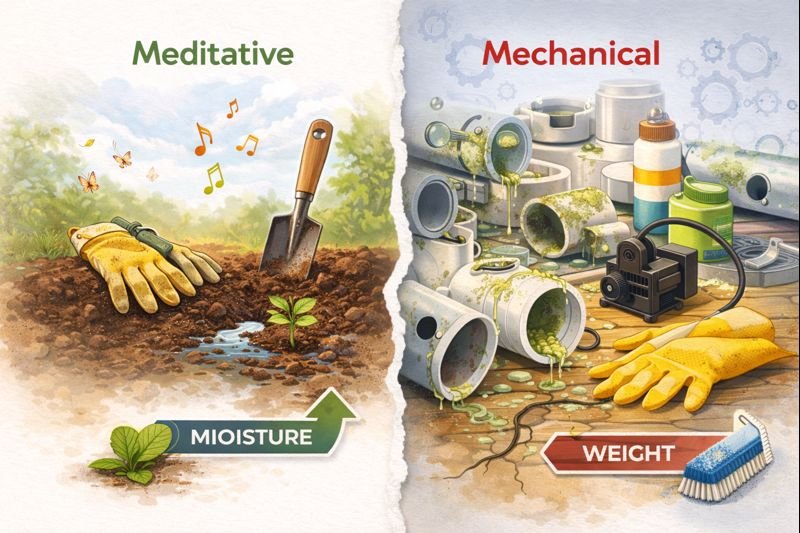
This is where many people experience “maintenance burnout.” Traditional gardening—weeding, mulching, and digging—is often seen as meditative. Vertical gardening, specifically the high-tech hydroponic kind, feels more like plumbing and dishwashing.
Every few months, you have to take the whole thing apart. You’ll be scrubbing algae out of plastic tubes and cleaning mineral salts off of pumps. If you skip this, your plants will suffer from “root rot” or biofilms. If you love the feeling of dirt under your fingernails, the mechanical nature of vertical systems might feel more like a chore than a relaxation.
4. The Biological Bottleneck
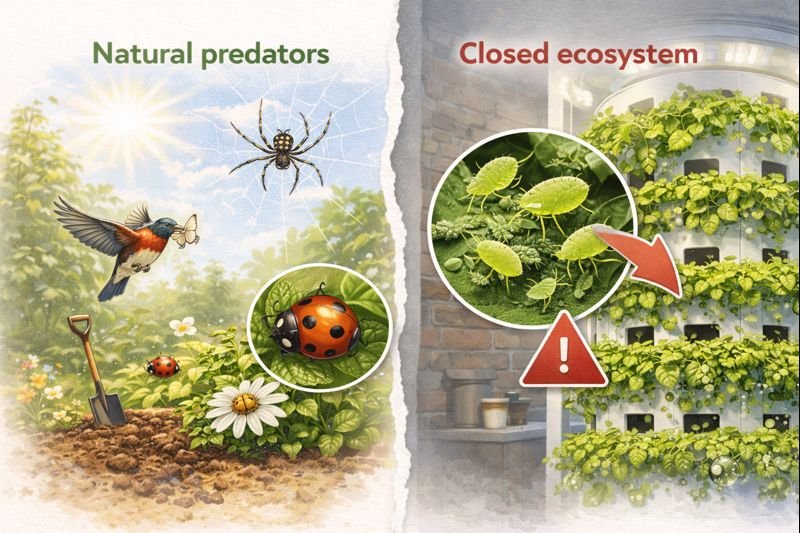
People often say vertical gardens are pest-free, but that’s a bit of a myth. In a backyard, you have birds, ladybugs, and spiders to help manage pests. In an indoor vertical garden, you have a closed ecosystem.
If a single aphid hitchhikes in on your clothes, it finds a “buffet” of tightly packed plants with no predators to stop it. Because the plants are so close together, an infestation can sweep through your entire tower in just a few days. It takes a vigilant eye to keep a vertical system healthy.
5. Why the Switch is Still Worth It
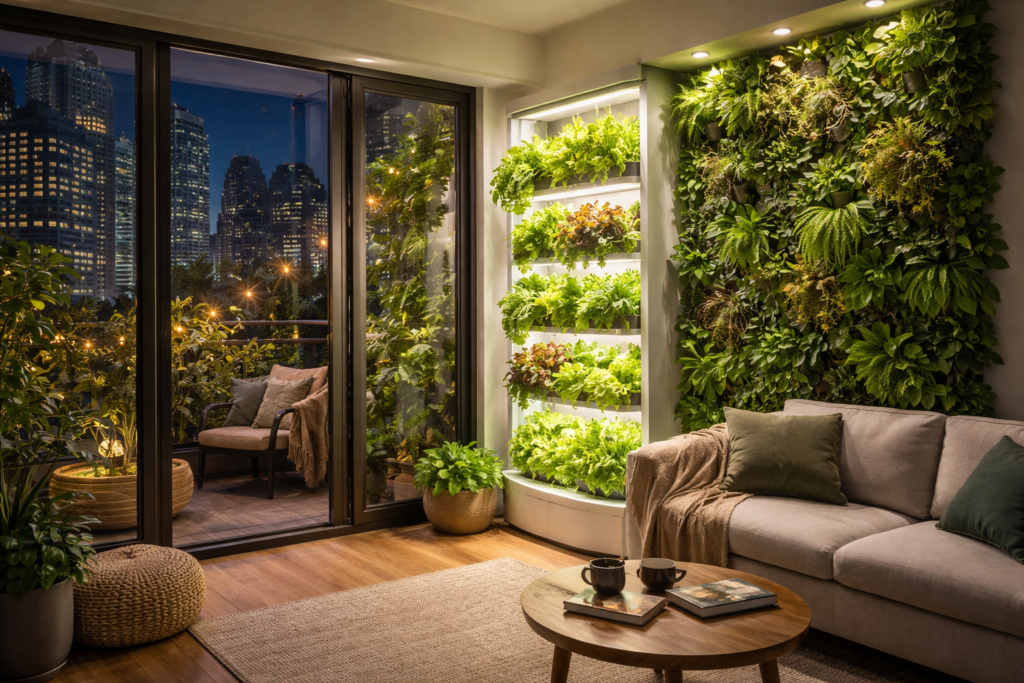
By now, I might sound like a bit of a “Debbie Downer,” but there are some incredible reasons to make the switch—especially if you live in a “concrete jungle.”
Year-Round Harvests: If you live in a cold climate, there is nothing like harvesting fresh basil and kale in the middle of January while it’s snowing outside.
Acoustic Peace: Believe it or not, a green wall on a balcony is a fantastic sound absorber. It can actually make your urban apartment feel quieter and more tranquil.
The Aesthetic: Let’s be honest—they look amazing. A glowing green tower makes a home feel like a modern, biophilic sanctuary.
Strategic Advice: What to Grow?
If you decide to switch, don’t try to grow everything. you should follow a list to know what to grow
YES: Leafy greens (lettuce, spinach, kale) and soft herbs (basil, cilantro, mint) are the undisputed kings of vertical growth.
NO: Avoid heavy “trouble crops” like standard pumpkins, large watermelons, or root veggies like potatoes. They’re just too heavy and bulky for most vertical pockets.
The Verdict: To Switch or Not?
You should switch if: You have limited space, live in an extreme climate, and enjoy the technical, data-driven side of gardening. It’s a specialized solution for urban life.
You should stay traditional if: You have plenty of sunlight and dirt, want a low-maintenance setup that can survive a power outage, and want to grow calorie-dense food like tubers or corn.
My Professional Suggestion? Try a hybrid model. Use high-tech vertical towers for your year-round herbs and salad greens, but keep your relationship with the earth through traditional soil beds for everything else. It’s the best of both worlds!