
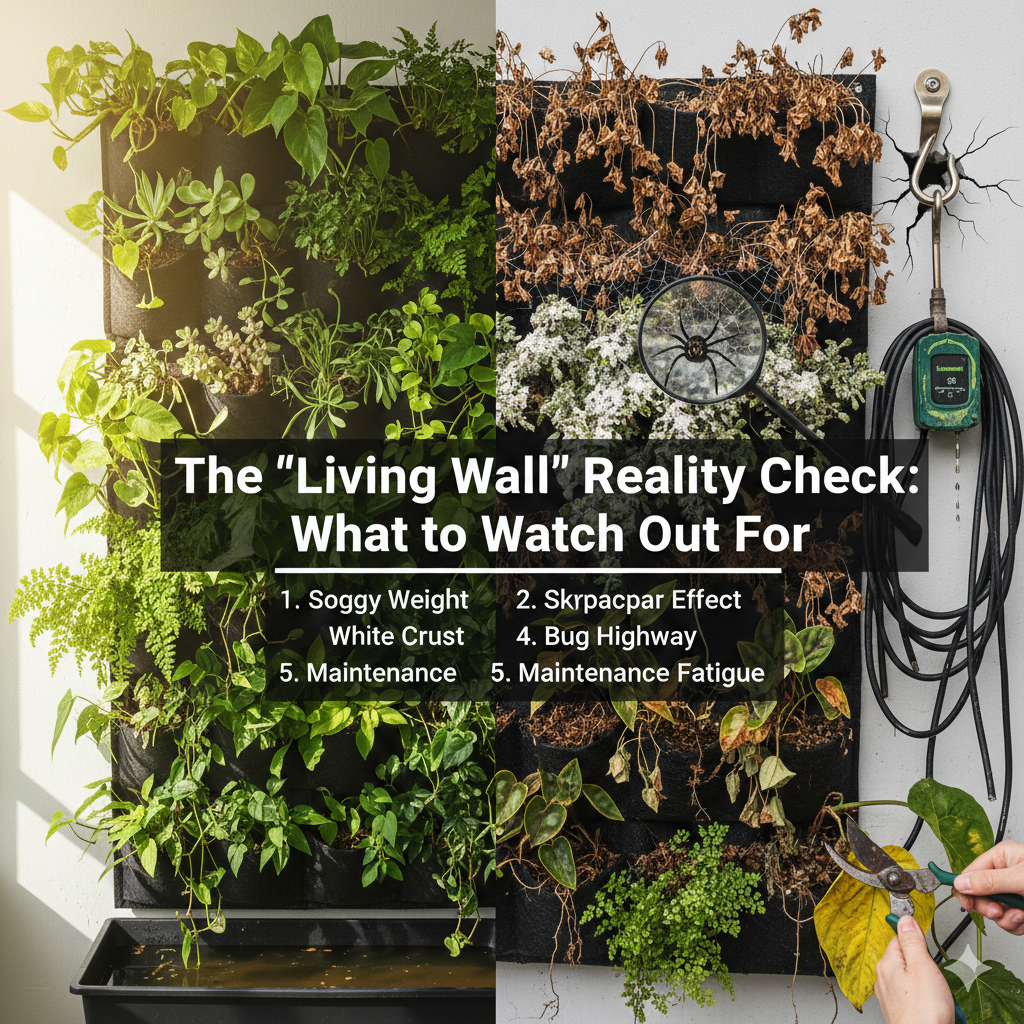
We’ve all seen those stunning photos: a wall of lush, perfect greenery that looks like a slice of the jungle right in someone’s living room. It’s enough to make any gardener reach for their credit card.
But here’s the thing—vertical gardens are a bit like high-maintenance pets. They are beautiful and rewarding, but they have some “personality quirks” that can catch you off guard if you aren’t prepared. Before you dive in, here are a few honest things to keep on your radar so your green wall stays happy.
1. Don’t Forget the “Soggy Weight”
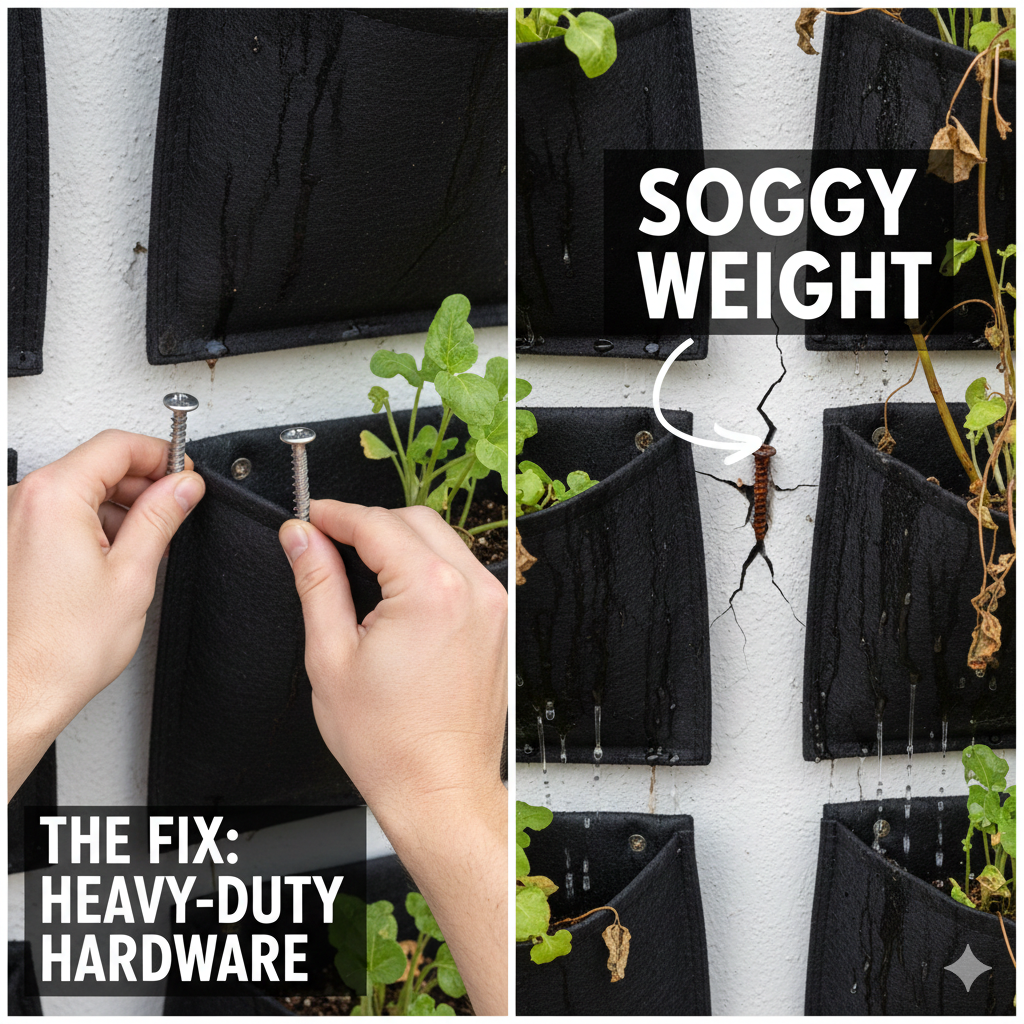
When you’re looking at a vertical planter, it’s easy to think about the weight of the plastic or the felt. But remember: dirt is heavy, and wet dirt is a whole different beast.
A planter that feels light in the store can weigh five times as much once it’s fully watered. Over time, that weight puts a lot of stress on your wall.
The fix: Skip the cheap indoor screws. Go for heavy-duty, rust-proof hardware (like stainless steel). You want something that can handle a “monsoon” level of soaking without budging.
2. Think of Your Wall Like a Skyscraper
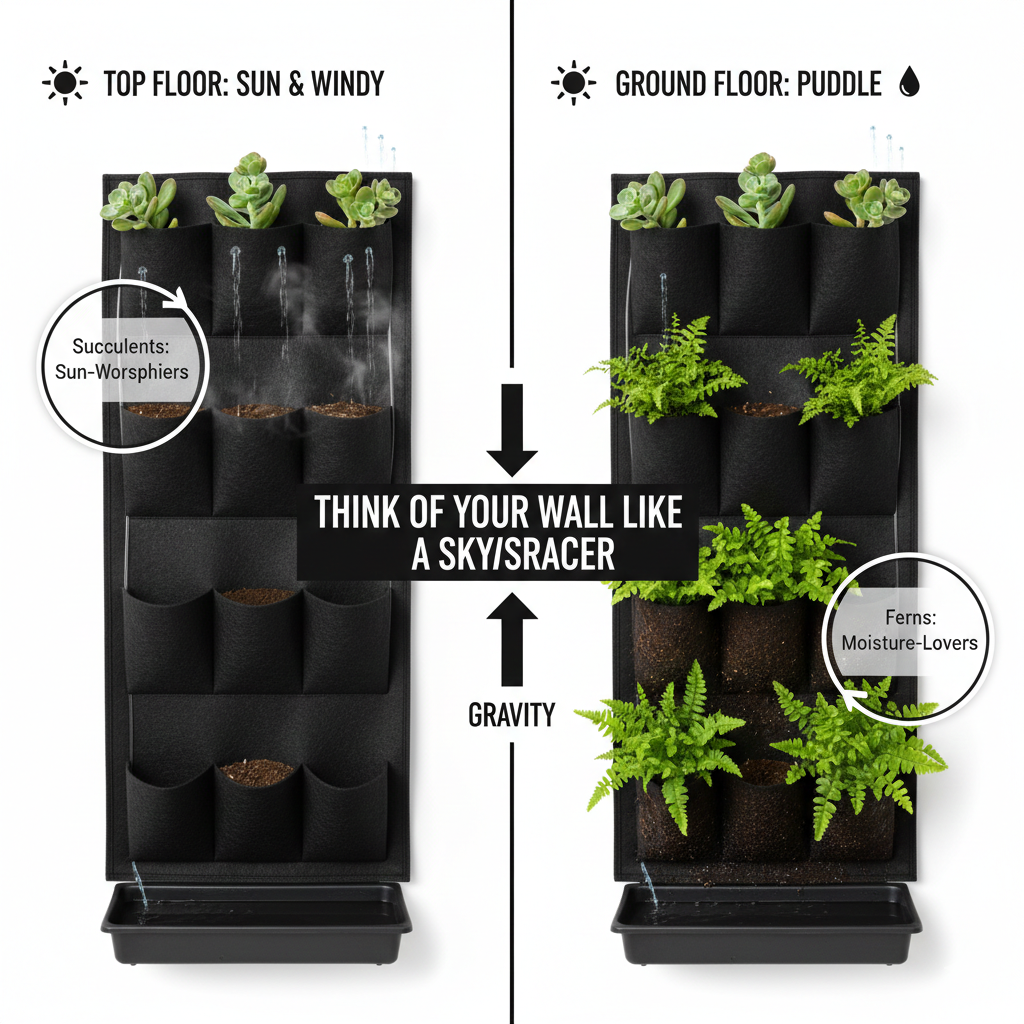
In a vertical garden, the “penthouse” and the “lobby” have totally different weather.
The Top Floor: It’s the hottest and windiest spot. The water drains out first, so these plants are always thirsty.
The Ground Floor: Gravity is a powerful thing. All the water from the top eventually ends up at the bottom, which can leave those plants sitting in a puddle.
The Strategy: Treat them differently! Put your “sun-worshippers” (like succulents) at the top and your “moisture-lovers” (like ferns) at the very bottom.
3. The Mystery of the “White Crust”
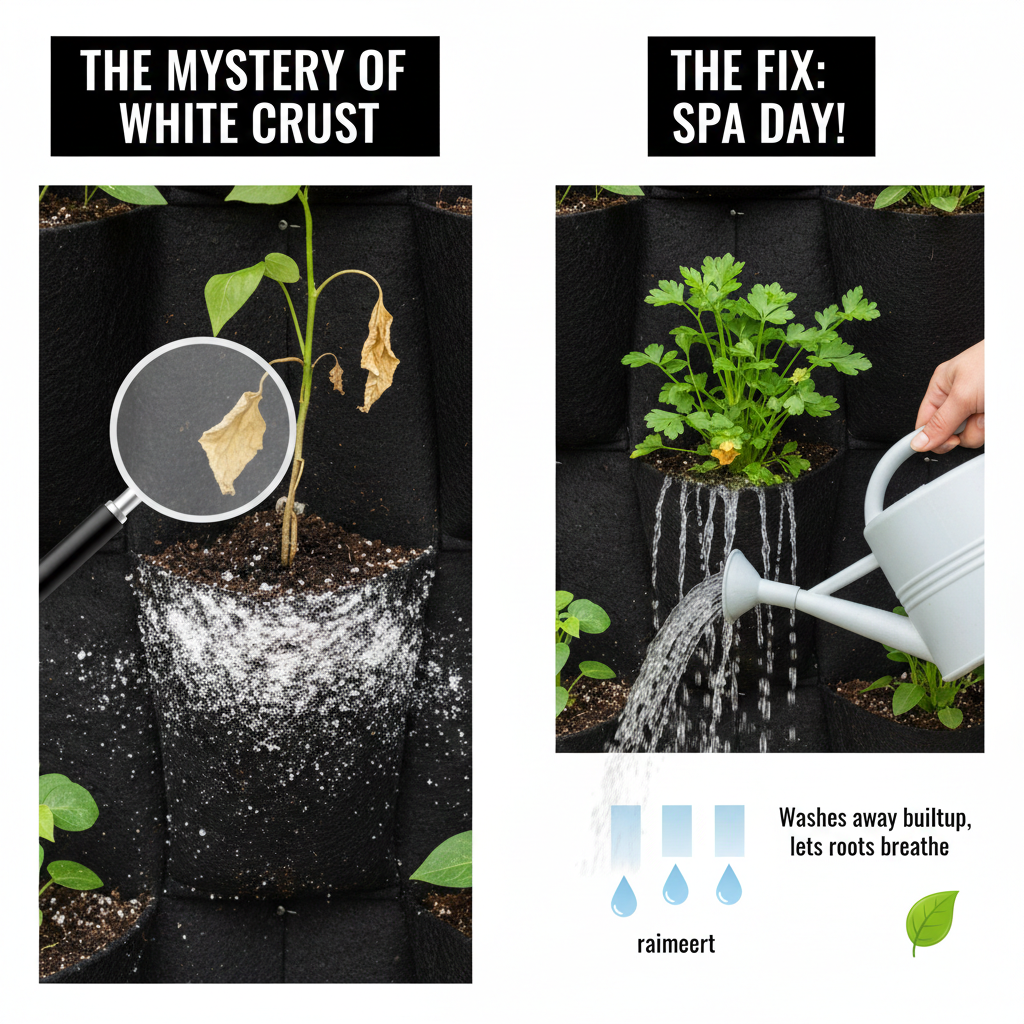
If you start seeing a white, salty-looking crust on your soil or the fabric of your garden, don’t panic—but don’t ignore it either.
This usually happens because as the water evaporates, it leaves minerals behind. Eventually, these salts make it really hard for the plant to actually “drink,” even if the soil is soaking wet. It’s a weird phenomenon where the plant can actually die of thirst while sitting in water!
The fix: Every now and then, give your garden a “spa day” by flushing it with fresh rainwater. It washes away the buildup and lets the roots breathe again.
4. It’s a Bug Highway
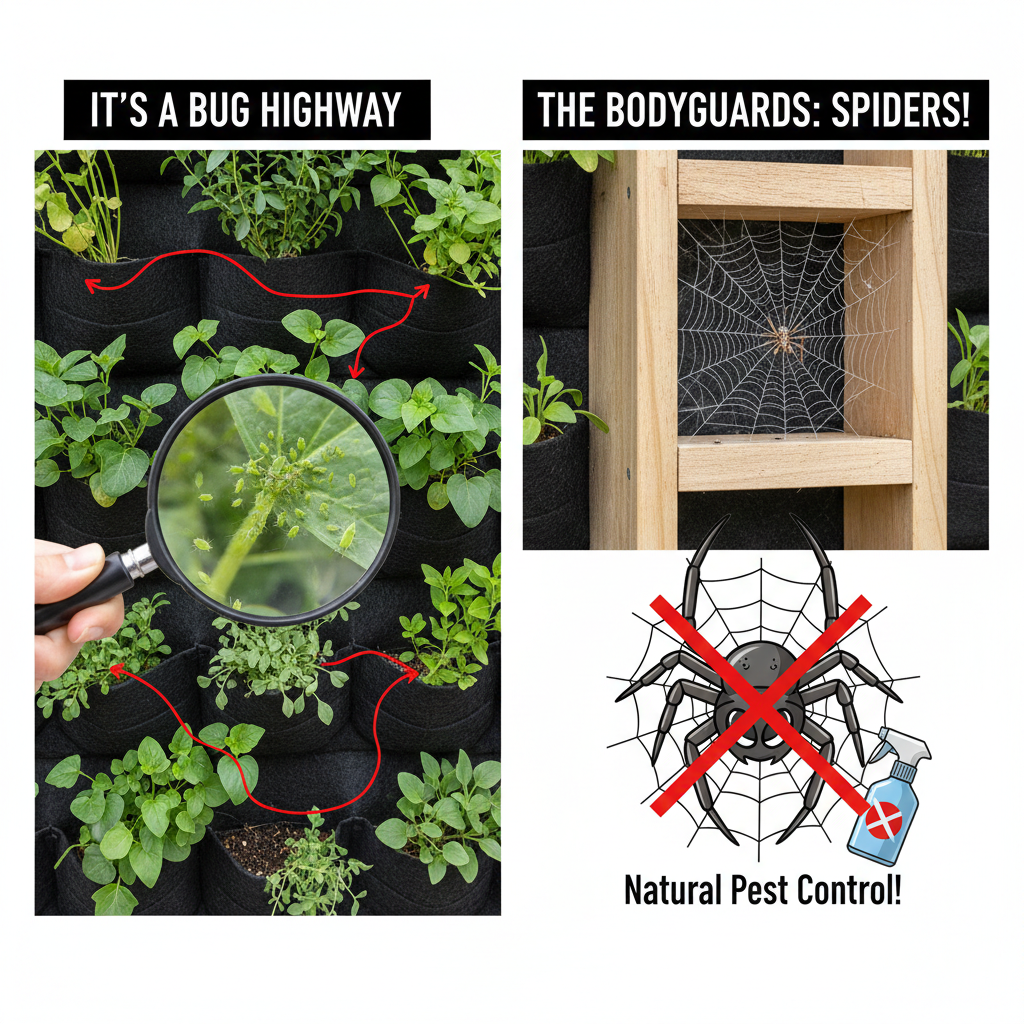 For tiny pests like aphids or mites, a vertical garden is basically a luxury hotel with a convenient elevator system. They can crawl from leaf to leaf and move through your watering lines with ease.
Instead of reaching for a chemical spray (which is messy and smells), keep an eye out for spiders. I know, not everyone loves them, but they are the ultimate “bodyguards” for your wall. They’ll set up shop in the frame and take care of the pests for you.
5. Be Kind to Your Future Self
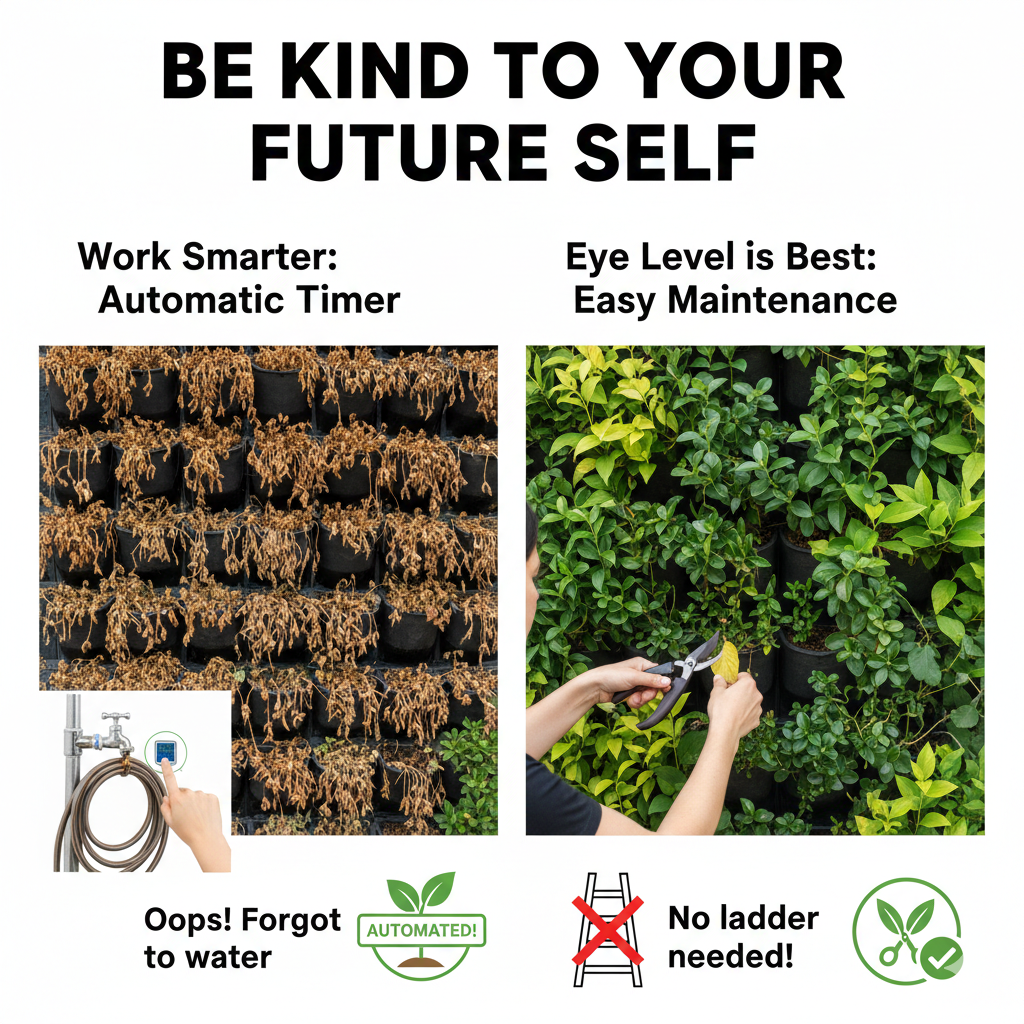
We all start with a lot of excitement, but “maintenance fatigue” is real. Vertical gardens dry out much faster than pots on the ground because they have less soil to hold onto moisture. If you go away for a weekend and forget the water, you might come back to a wall of brown.
Work smarter: Get a simple automatic timer for your water. It’s a total lifework-saver.
Eye level is best: Try to keep the plants that need frequent trimming right where you can see and reach them easily. If you have to get a ladder out every time a leaf looks yellow, you probably won’t do it!

At the end of the day, a vertical garden is a living, breathing thing. It won’t stay “perfect” like a picture, and that’s okay! A few yellow leaves or a plant that needs replacing is just part of the journey. If you plan for the weight and the water, you’ll spend less time worrying and more time enjoying your own personal jungle.