
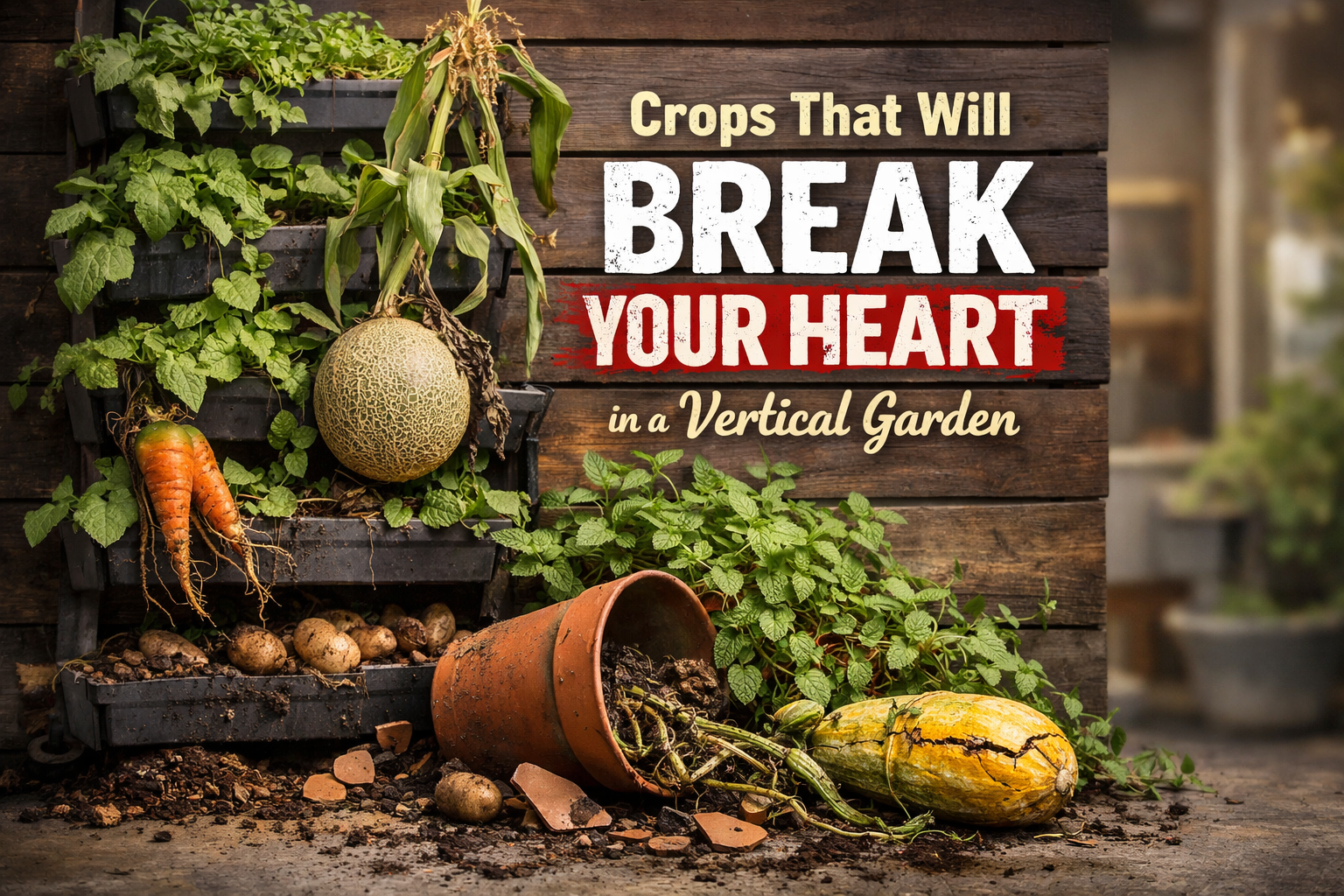
So, you’ve decided to start vertical gardening. That’s awesome! There is something truly magical about turning a bare wall or a tiny balcony into a lush, green oasis. It’s a great way to save space, it looks stunning, and it’s a fun project to show off to your friends.
But before you head to the garden center and buy every seed packet in sight, I have to give you a little “tough love” advice.
When you’re new to vertical gardening, it’s easy to think you can grow anything as long as you have enough water and light. Sadly, that’s just not how it works. Some plants are like marathon runners who need wide-open spaces, while others are heavyweights that will literally pull your vertical garden off the wall.
Why Some Plants Fail in Vertical Gardens
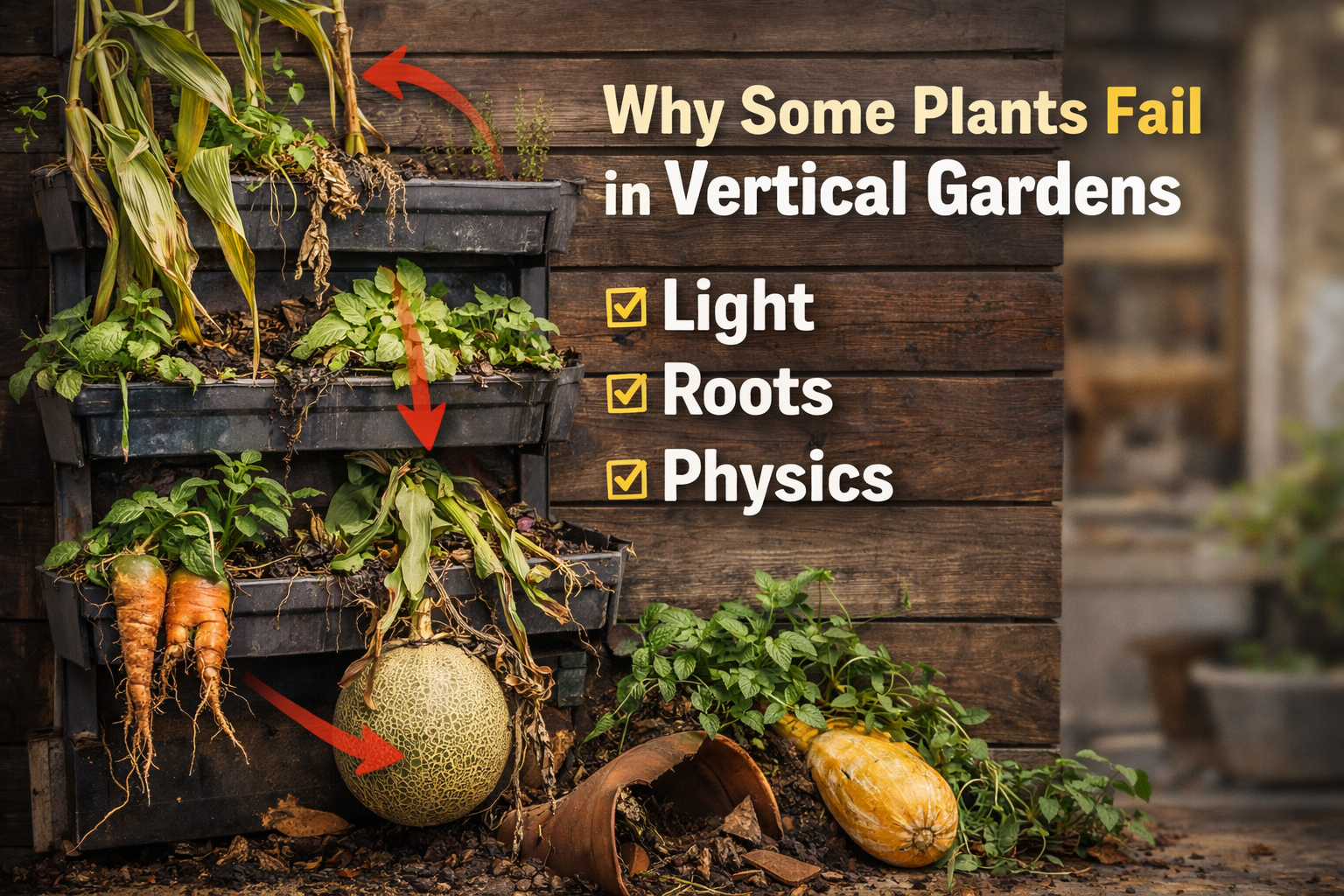
Before we get into the specific “no-go” list, it helps to understand why these systems are so picky. It usually comes down to three things: light, roots, and physics.
First, let’s talk about light physics. In a traditional field, the sun moves across the sky, hitting every part of the plant. In a vertical garden stack, especially indoors with LED lights, the light is often fixed. This creates a “shadow effect” where the top leaves are happy (or even scorched), while the bottom leaves are starving in the dark.
Second, there is the root volume problem. Most planters used in vertical gardening are small to keep them lightweight. However, many big crops need deep, wide root systems to stay healthy. When a plant’s roots hit a plastic wall and start circling around and around, the plant gets stressed, stops growing, and becomes a magnet for pests.
Finally, there’s the tug-of-war with gravity. A vertical garden is essentially a heavy load hanging off a wall. As plants grow and get full of water, they create “torque”—a twisting force that can snap flimsy trellises or pull anchors right out of your masonry.
To save you from a “garden fail,” let’s look at the crops you should definitely avoid for your vertical garden setup.
1. The “Tall and Hungry” Club: Corn and Grains in a Vertical Garden
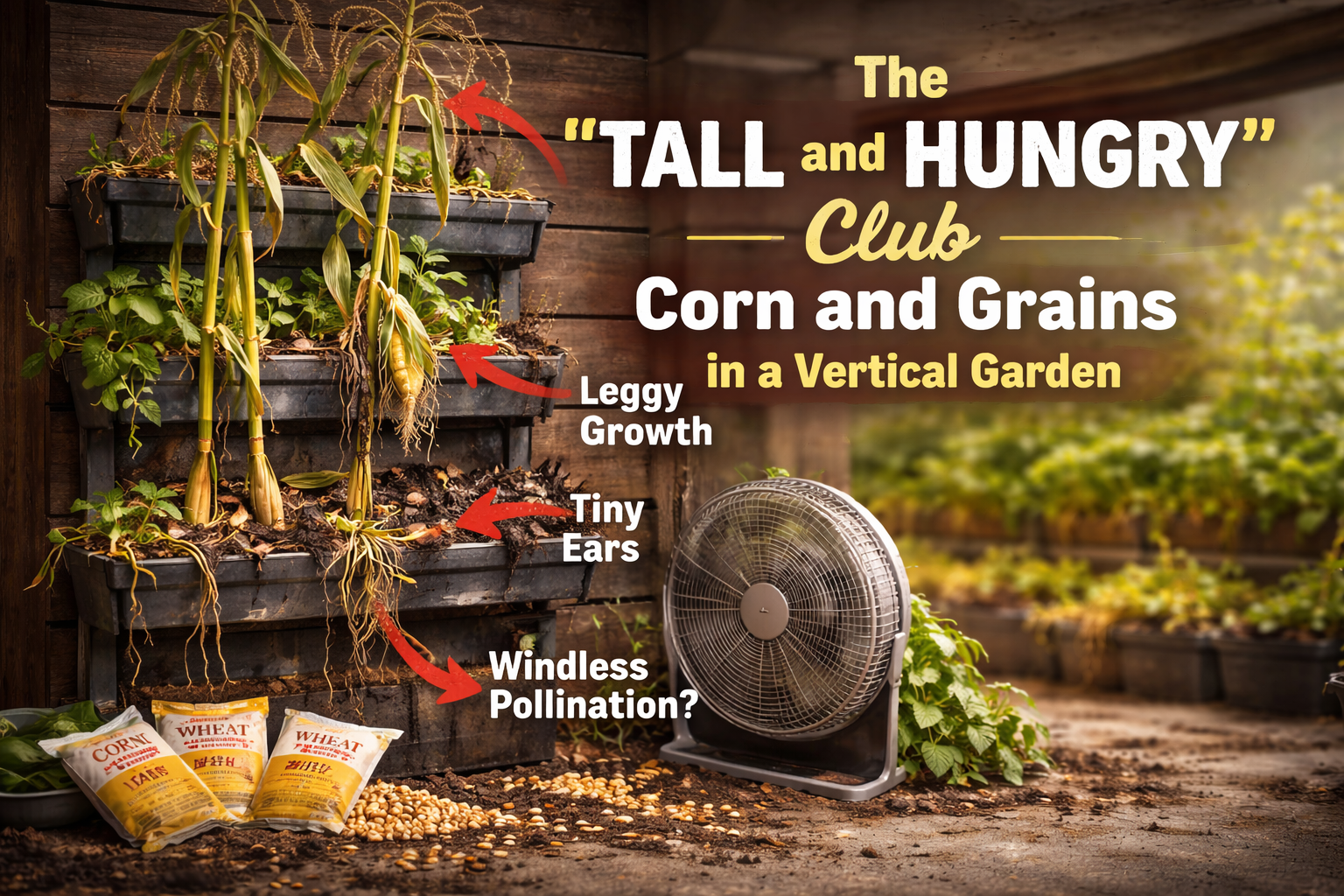
We all love the idea of home-grown sweet corn, but corn is a nightmare for most vertical gardening systems. Here’s why:
Sun Seekers: Corn is a sun-worshipper that needs intense, direct light. In vertical spots, corn gets “leggy”—it grows tall and skinny, searching for light but never actually produces an ear of corn.
The Wind Factor: Did you know corn is pollinated by the wind? Indoors or on a sheltered balcony, there isn’t enough breeze to move the pollen around. Unless you want to spend your weekends “hand-pollinating” with a tiny brush, you’ll end up with empty cobs.
Space Hogs: Corn grows over six feet tall. Most shelves in a vertical garden are only a foot or two apart. This creates a physical mismatch that is very difficult to overcome.
2. Root Veggies and the Vertical Gardening “Potato Tower” Myth
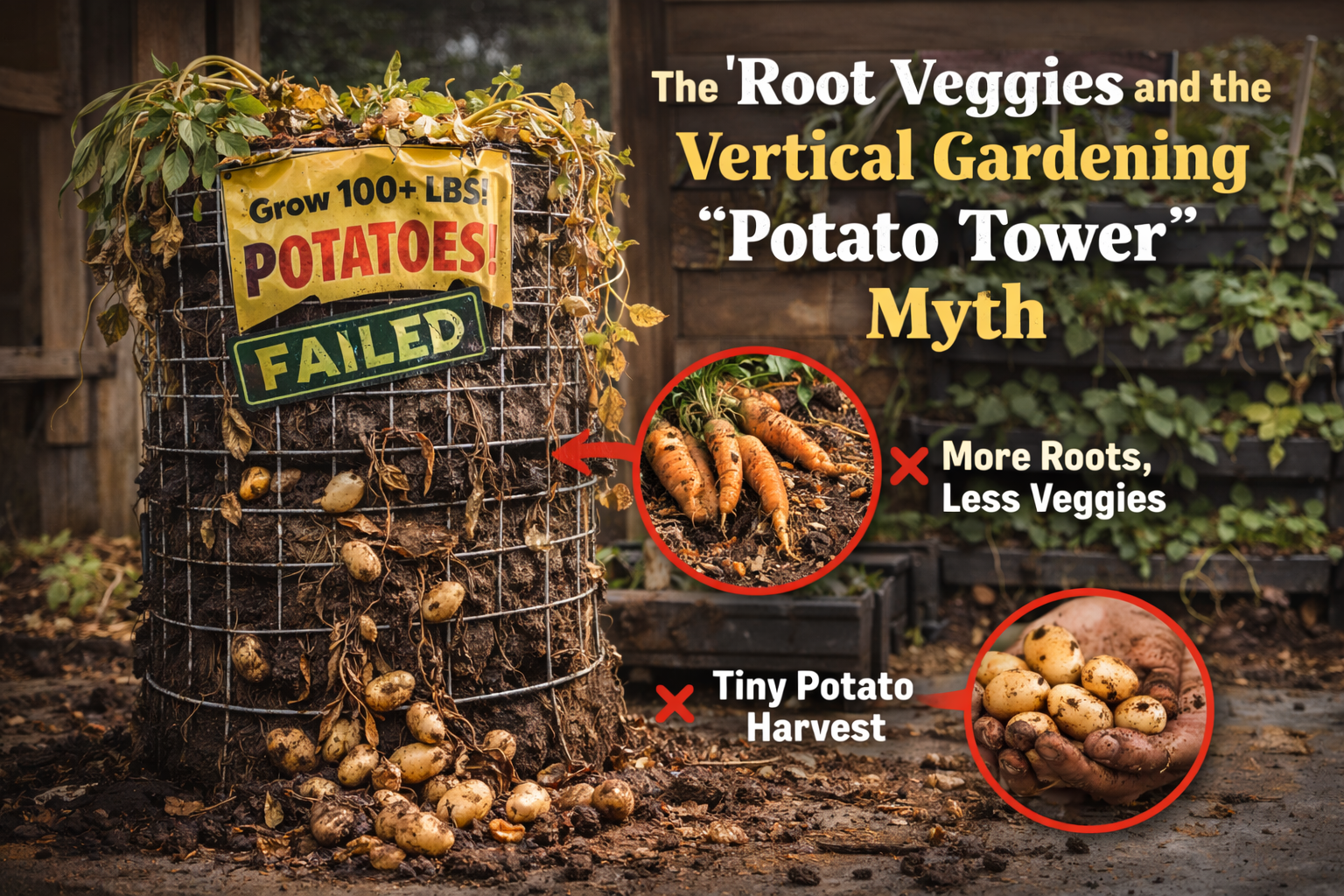
You might have seen those “Potato Towers” on Pinterest or Facebook that claim you can grow 100 pounds of spuds in a tiny crate. As someone who has seen many of these fail, let tell you: it’s mostly a myth.
The Energy Trap: Potatoes only grow tubers (the part we eat) in a small area above the seed. If you keep burying the stem to go higher, the plant spends all its energy surviving being buried instead of making potatoes.
Root Cramping: Carrots and parsnips need deep, loose soil. In a vertical garden container, they hit the bottom or the sides too quickly. This causes them to “fork” or grow into weird, woody knots that aren’t very tasty.
3. The “Heavyweights”: Melons and Squash in Vertical Gardening
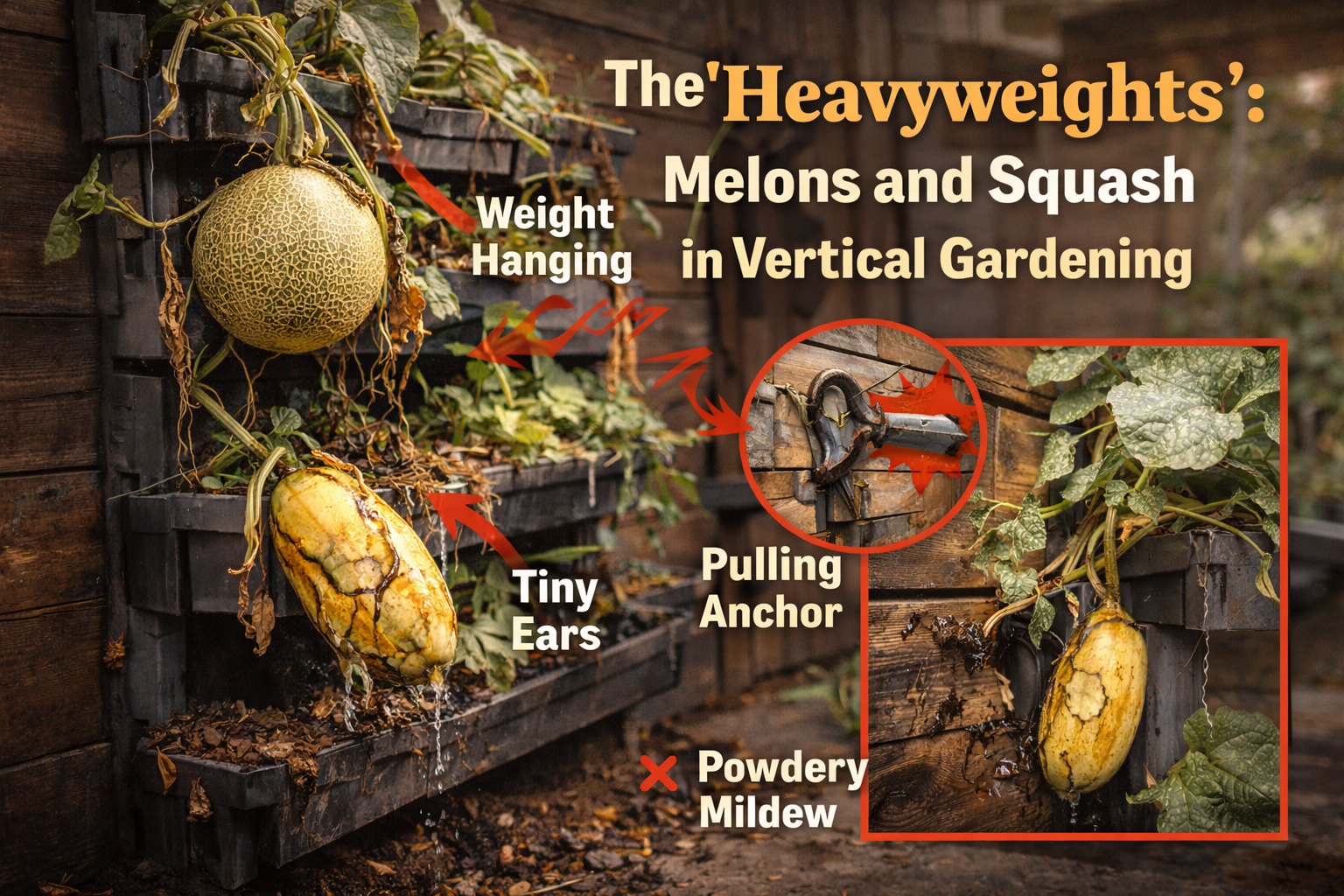
Cucumbers and squash seem like a good idea because they grow on vines, right? Well, yes and no.
The Gravity Problem: Imagine a five-pound melon hanging from a vine in your vertical garden. In a field, the ground holds that weight. Vertically, that weight is pulling on the plant’s “neck” and your garden’s mounting brackets.
Wall Damage: A mature squash plant full of water and fruit is incredibly heavy. If your vertical garden isn’t anchored into the studs of your house, the whole thing could come crashing down after a heavy rain.
Mildew Issues: These plants have huge leaves that trap moisture. Without great airflow, they quickly get “powdery mildew”—a white fungus that looks like flour and kills the plant.
4. The “Invasive” Menace: Mint in Your Vertical Garden
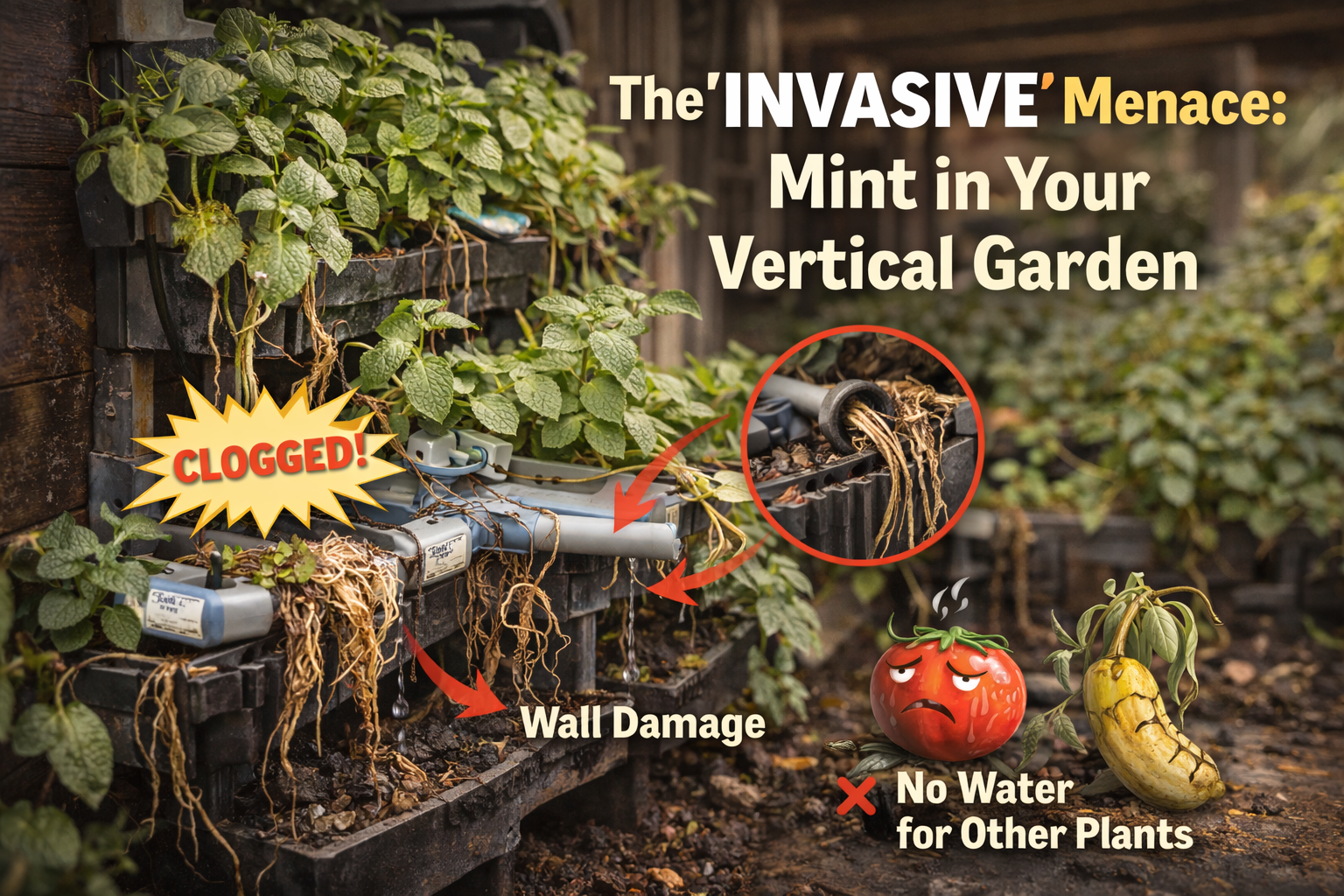
Wait, mint? Isn’t that a herb? Yes, but mint is a bully. If you put mint in a vertical gardening hydroponic system, its roots (runners) will grow so fast they can clog your pipes and pumps, starving all your other plants of water. Keep your mint in its own separate pot!
Finding the Perfect Match for Your Vertical Garden
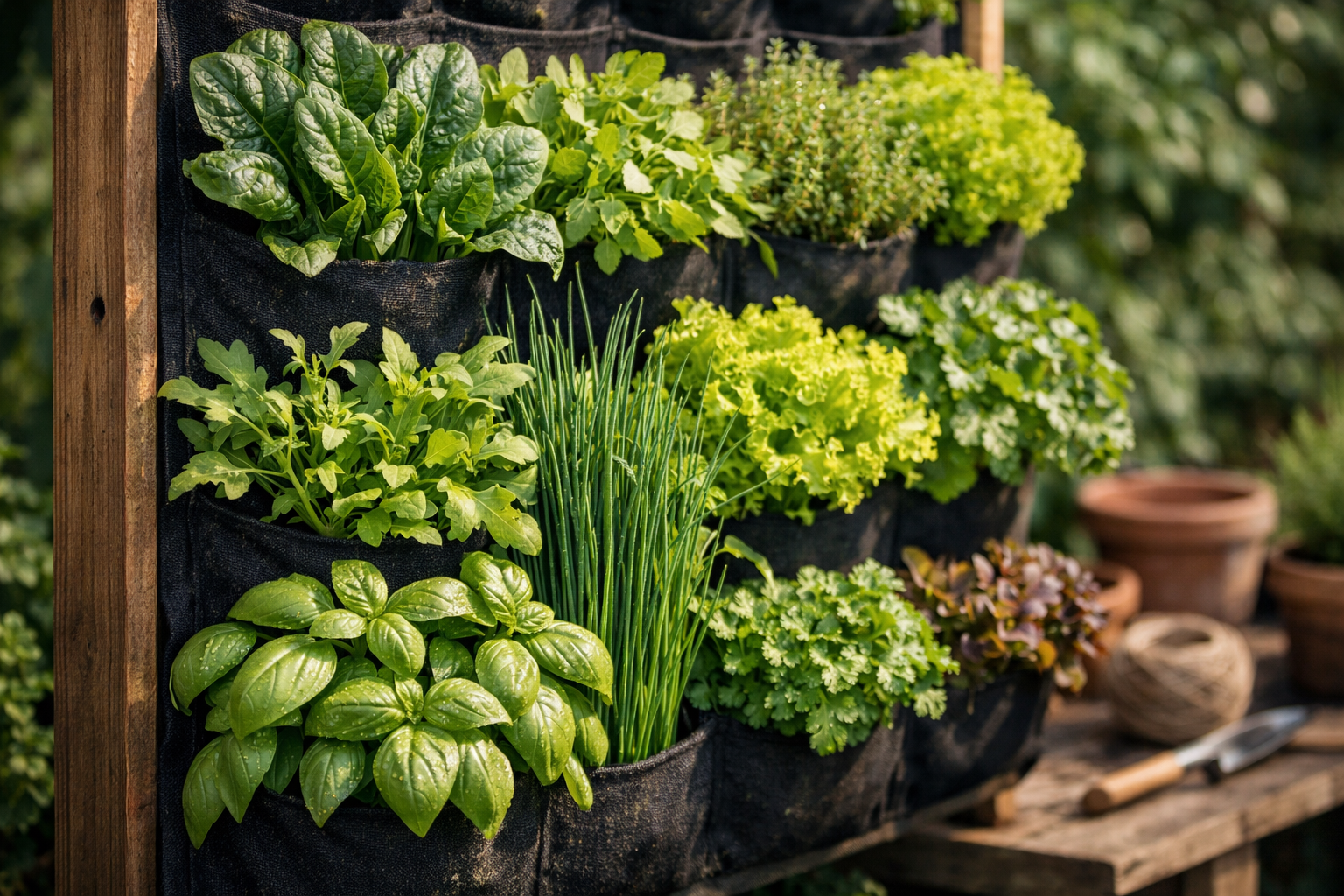
Now that you know what to steer clear of, you might be wondering: “What should I be planting?” Generally, you want to stick with high-value, low-weight crops. Leafy greens like arugula and spinach, or compact herbs like basil and chives, are the true superstars of vertical gardening. They love the drainage and the air circulation that these systems provide. To see our full list of recommended plants and how to get them started, check out our companion guide on the best crops for beginners!
How to Succeed: The “Physics-First” Approach
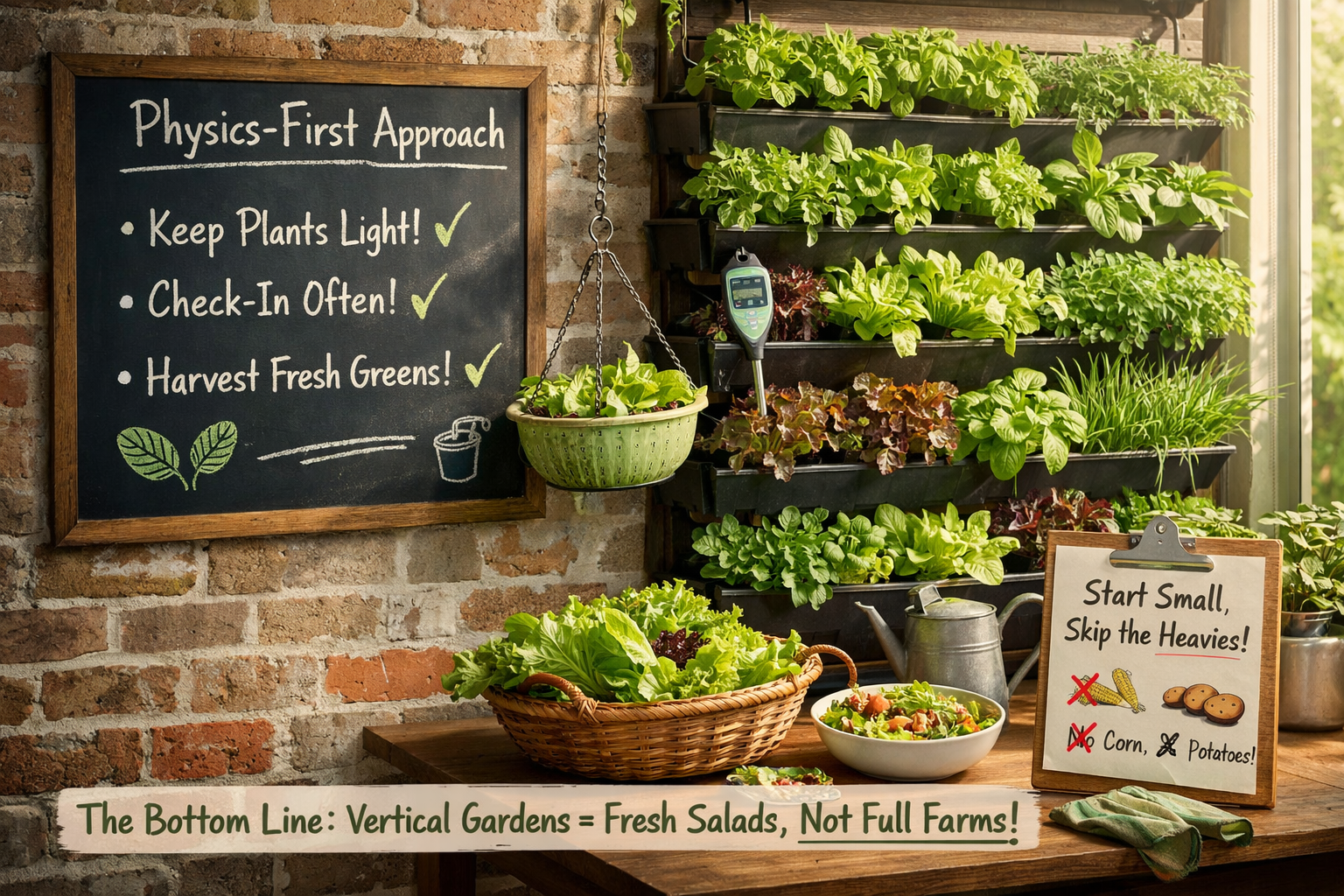
Vertical gardening is an incredible journey once you align your goals with the physics of your space. Success is all about picking the right teammates—like leafy greens and herbs—while staying mindful of weight and moisture. If you keep your plants light and your check-ins frequent, you’ll find that your vertical garden isn’t just a way to save space; it’s a way to bring your home to life.
The Bottom Line: A vertical garden is a specialized tool, not a total replacement for a backyard. Start small, avoid the “heavy hitters” like corn and potatoes, and you’ll be harvesting your own fresh salads in no time!